Some people eat, sleep and chew gum, I do genealogy and write...

Friday, December 30, 2022

Do numbers matter? Looking at numbers and genealogy


Inevitably, when I mention that I am involved in genealogy, I am asked how many names I have in my family tree. If that question doesn't come up immediately, then I will probably be asked how far back in time I have researched. I am used to both questions and to the first, I will usually say something vague such as "As far back as there are records" or something similar. Although I should be answering about a billion because I use the FamilySearch.org website. The second question is bothersome. The main reason being is that I don't know the answer. I usually end the conversation by saying, "Far enough" or whatever. 

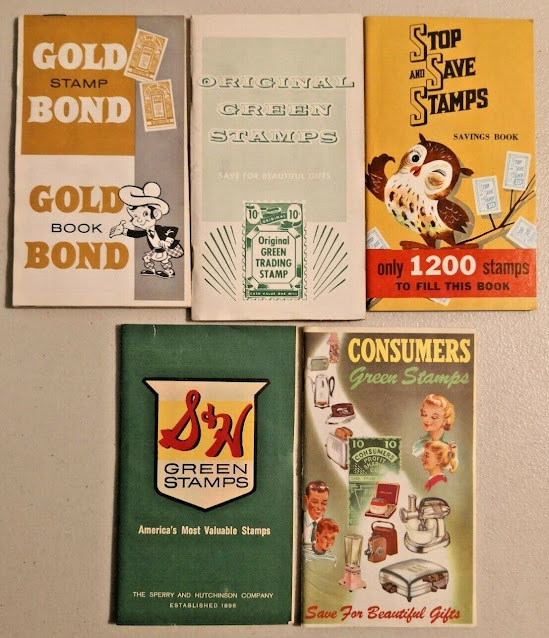
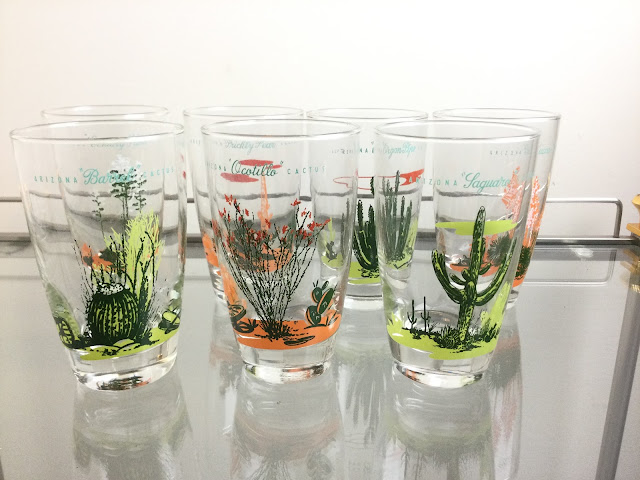
The real issue with these and similar questions is that genealogy is being portrayed as some sort of game or competition. It has been a long time since I wrote about this issue, but nothing has changed. I call this the savings stamp syndrome. When I was a lot younger, many stores and gas stations would have a way to track sales that included giving away stamps to put in a savings book. Books filled with stamps would give the customer access to "buying" items in a catalog that were "purchased" with savings stamps. Gas stations would do the same, usually giving away dinnerware such as decorative glasses with a certain amount of purchases. When you made your purchase, you had to make sure you got your stamps or whatever showed that you were collecting for a premium.


A service station in Phoenix called Blakely's gave away these glasses. 


Genealogy is the antithesis of premium giveaways. Of course, there are rewards. As must be abundantly apparent, I am a member of The Church of Jesus Christ of Latter-day Saints. As members, we have some rather complex beliefs that reinforce an interest in seeking out our ancestors. See Temple Work. These beliefs provide a built-in incentive but surprisingly few members of the church are involved in any form of family history or genealogical research.  Estimates of active involvement in genealogy run as low as 3% of the members. This is probably well above the small percentage of the population of the world who are so inclined. One surprising aspect of the members' involvement in genealogy is their surprise that those outside of the church are interested in genealogy. Even those who have never looked at a family group record in their life seem to believe that an interest in genealogy is uniquely limited to members. 

Looking for numbers in genealogy is just part of the common world-wide focus on competitive sports. Because I lived in Argentina for two years, I have always had a connection to that country and the recent news of the Argentine win of the World Cup. Here is a photo of what it looked like in downtown Buenos Aires to welcome the winning team. 

The Argentine soccer team that won the World Cup title ride on an open bus during their homecoming parade in Buenos Aires, Argentina, December 20, 2022. (AP Photo/Rodrigo Abd) 
“Argentina’s World Cup Parade Abandoned after Millions Jam Streets to Celebrate Win | The Times of Israel.” n.d. Accessed December 30, 2022. https://www.timesofisrael.com/argentinas-world-cup-parade-halted-after-millions-jam-streets-to-celebrate-win/.


Wednesday, December 28, 2022

Will I be replaced by Artificial Intelligence?


Our family has recently been discussing the advantages and disadvantages of artificial intelligence or AI. Several of our family members are university professors and/or are involved in writing professionally and are keenly aware that their students may be using AI to write homework and take-home tests. I decided to see how AI would write a fairly simple blog post about genealogy. I used the chat.openAI.com website to generate a sample blog post using this phrase as the starting point: "Explain the basics of genealogical research in the United States."

Here is what was produced by the program. 

Genealogical research is the process of tracing the history of a family and its ancestors. In the United States, genealogical research can be a rewarding and challenging hobby. Here are some basic steps to get started:

  1. Gather as much information as you can about your family, including names, dates of birth, marriage, and death, and places of residence. This information can come from family records, documents, photos, and stories passed down through the generations.
  2. Use online resources such as census records, military records, and immigration records to verify and expand upon the information you have gathered. The United States Census Bureau, National Archives, and Library of Congress all have extensive collections of historical records that can be accessed online.
  3. Visit local libraries and archives to access additional resources, such as local newspapers, deeds, wills, and probate records. Many libraries and archives also have staff members who can assist with genealogical research.
  4. Join a genealogical society or attend genealogy conferences to connect with other researchers and learn about new resources and techniques.
  5. Consider hiring a professional genealogist if you are having difficulty finding certain records or if you want more in-depth research assistance.

It's important to keep in mind that genealogical research can be time-consuming and may require some patience. It's also important to be mindful of the privacy of living individuals and to follow good research practices to ensure the accuracy of your findings.

Well, since this only took me about a minute to have the AI program do its work, it would certainly increase my output to several articles a day. However, when I write I include links to sources, etc. but I could use this short piece as an outline to expand on and come up with a more detailed blog post. Are there any moral or ethical reasons why I shouldn't use this AI product? That is a major area of discussion in the media right now. Of course, I am far from the first person to think about using Ai or writing about the product. See  Mayfield, StoryChief-Content Marketing Blog- Dayana. n.d. “We Put Writing AI to the Test for a Blog Post.” StoryChief - Content Marketing Blog. Accessed December 28, 2022. https://storychief.io/blog/writing-ai.

I also write in the first person and usually express opinions (always). Let's try this again. Here is the title from one of my recent blog posts: "Comments on the limitations of online genealogical research." You might like to compare what I wrote in that article with what the AI program wrote from the same title. Here is the AI version:

Online genealogical research can be a useful tool for discovering information about your family history, but it also has its limitations. Some of the limitations of online genealogical research include:

  1. Limited availability of records: While many records are now available online, many others are not yet digitized or are only available in physical form. This can make it difficult to access certain records, especially if they are not held at a local library or archive,
  2. Inaccurate or incomplete information: Some online records may contain errors or omissions, especially if they have been transcribed or translated from original documents. It's important to verify information from multiple sources and to use caution when relying on online records.
  3. Limited context: Online records often lack the context and background information that can be found in original documents. This can make it difficult to fully understand the context of the information you are researching.
  4. Privacy concerns: Some online genealogy websites may require users to enter personal information in order to access certain records. It's important to be mindful of privacy concerns and to carefully consider the information you are sharing online.

Overall, it's important to use online genealogical research as just one part of a larger research strategy, and to supplement it with other sources of information, such as physical records and in-person research.

Again, the ideas expressed by the AI writing are good ideas, but they are essentially copied from a variety of sources, but what I had to say in the original article shares little with the AI produced writing. However, the last numbered statement about privacy is not quite accurate. Yes, we do need to be aware of privacy concerns but I am not aware of any genealogy websites that require a user to enter personal information in order to access records. Dead people don't have privacy.

AI has certainly come a long way from the days of the early program called ELIZA from MIT and written by Weizenbaum. See Thorn, James. 2020. “The History of Artificial Intelligence: The Turing Test.” Medium. May 14, 2020. https://towardsdatascience.com/the-history-of-artificial-intelligence-the-turing-test-c1d6777d2970.

I may have some use for this AI text but right now, I am not going to stop writing. By the way, if you are worried, I will clearly identify any AI text I use in my blog.  

Genealogical Research: Beyond BMD Records


A surprisingly large number of the source entries in online family trees that have supporting citations to historical/genealogical records focus entirely on Birth, Marriage, and Death (BMD) records sometimes with a few census records thrown in. I surmise that the main reason for these limited types of records lies, in part, in the family group forms built into the online family tree websites. Many of the conversations I have with people seeking help in finding their ancestors in the United States start with a request to help them find a birth, marriage, or death record. They usually refer to certificates of these events without knowing that governmental certificates for vital records is a fairly recent development. There are states in the United States that as of the date of this post still do not require that all births or deaths be officially recorded. 

My analysis of this phenomena is directed primarily at records created reflecting birth, marriages, and deaths in those countries that rely on the Western European genealogical methodology for recording such information. 

Although some few states began recording birth and death information early such as Massachusetts in 1639 and Virginia in 1632. See Statistics, National Research Council (US) Committee on National. 2009. The U.S. Vital Statistics System: A National Perspective. Vital Statistics: Summary of a Workshop. National Academies Press (US). https://www.ncbi.nlm.nih.gov/books/NBK219884/. Full compliance by all of the states in the United States has yet to happen. The United States Federal Government maintains the National Death Index but the information in the index is only available to investigators solely for statistical purposes in public health and medical studies. The service is not accessible to organizations or the general public for legal, administrative, or genealogy purposes, etc. See “Data Access - National Death Index - FAQs.” 2022. October 4, 2022. https://www.cdc.gov/nchs/ndi/faq.htm.

The vast majority of the currently available genealogy or family history desktop programs and website-based programs (apps) use a standard entry form for individual information that is mostly Western European based and contains fields for a name, a birth date and place, a death date and place, and a burial place. Additionally, most programs have a field for the entry of "christening" information based on the Catholic and Protestant practices of infant baptism. Here is an example from the current and relatively new form from FamilySearch.org


As you can see from this form, birth and death are emphasized and any other information is not considered to be essential. The issue is that both birth and death information in the form of a specific birth date and place as well as the same information about a death is commonly not available in the specific form requested. In all fairness, I should mention that FamilySearch has recently added the ability to format names in a variety of ways with a drop-down menu of choices. 


What happens if birth and death information are not available? Usually nothing. Many researchers continue to look for this information without success because, as it appears from the form, this information is "required." 

There are research helps or guides that provide information about how to obtain "alternative" birth and death information, but these guides are relatively hard to find. Here is one such guide from the FamilySearch.org Research Wiki.

https://www.familysearch.org/en/wiki/New_York_Record_Finder

The FamilySearch Research Wiki has one of these pages for each state in the United States and other, more general such pages for other locations. 

Genealogists have developed methodologies for estimating both birth and death dates and have accepted the generalization of both types of records for the locations of both events also. Entries such as this one have become very common:


This type of entry is commonly a guess based on the supposed birth date of a child or a marriage date using an estimate of the parent being twenty years old. It is also noteworthy that the birth date is estimated and there is no Christening date. This indicates that the research about this person is speculative and not based on any specific record or records. This particular entry is for William Yates ID# MBKL-PDS. He is listed with 12 attached sources. From a cursory view, this person seems to be carefully documented although birth dates were usually not recorded at this time in England. This brings up one of the Rules of Genealogy #13: Genealogists abhor a blank field.

Adding a calculated birth date when no other birth information is available from any of the sources listed except the birth of a child is one contributing factor to mixing up people with the same name. As is the case with William Yates ID# MBKL-PDS, the best record for this person is a marriage record. There may also be a will and probate records. 

There are two conflicting genealogical methodologies. One rule of thumb says to start your genealogical research looking for those events in an ancestor's life that are the most recent. The logic is that there will be a chance for more records the closer you look to the present. This method works fine until you get back to the mid-1700s and then you can never tell which record about an ancestor may have been preserved. So, you should always look at all the available records for the locations identified with the ancestor. The other method is to look for marriage records first. The reason behind this rule of thumb is that marriage records affect the ownership of real property and therefore marriages are more likely to be recorded. Either way, when you get back in time, records become less frequently kept, preserved, and available. 

In all cases, you need to move beyond only looking for the BMD records especially when the records are probably not available. You can usually determine whether or not specific birth, marriage, and death records are available by doing some historical research. For example, it is commonly known that in England, parish records before 1538 did not usually contain information birth or death information about individuals. This changed when Henry VIII mandated the records be kept. Even with this mandate, uniform compliance with the mandate did not occur until many years later. Before 1538, a genealogical researcher must rely on probate and other records.

When you see an entry in a family tree that has no cited records supporting a birth or death date, you can assume that the information is likely incomplete and additional research should be done. But remember, the absence of a death record does not mean the person is still alive (Rule #2 of the Rules of Genealogy). 

We should always go with the best and most complete information we can find in all the available records. 


Tuesday, December 27, 2022

A Lot of Genealogical Challenges Lately


I guess I was a little preoccupied with challenges in my recent blog posts. Not only did I find researching the immigrant challenging, I also found lost or missing records and access to genealogical records as challenges. Yes, they are all challenges, and they all have one thing in common: records that are not and possibly never will become unavailable. Genealogy is a process of discovery, and we are always getting into uncharted territory and sometimes going completely off the map. 

A challenge is something that is harder to do than those things that are in our comfort zone. As you become more experienced in genealogical research, the challenges increase in difficulty until you find yourself lacking the time, resources, or knowledge to find any more records. My solution to this challenge has always been the same; learn more. Every time I come to the end of an ancestral investigation; I start learning. But the reality of historical research is that for any one ancestral person, the necessary records may not have been kept or may have been lost. Immigrants fail to record their place of origin, the information needed to identify an ancestor's parents may have never been recorded or was lost to a fire/earthquake/flood/whatever. Finally, there may be some bureaucrat sitting in an office guarding a pile of records in the attic or basement and neither I nor anyone else is going to ever know the records are there slowly decaying away. 

Despite all this, the reality of genealogical work is that most people give up before they even get to the real challenge. One example is the would-be genealogist who starts a family tree on a popular online, family tree website and runs out of automatic record hints and thinks that is the end of the line for investigation without realizing that there are hundreds or thousands of other places to look. 

Now this brings up the factual basis for my preoccupation with challenges. Too many times in the past, my inability to find the next record was based on my own ignorance of the options for further research. The next hill or rock to climb just seems to be getting further away and harder to climb until I stop researching and try another ancestral line for a while. Currently, my nearest end-of-line situations are in the 7th generation and in the mid-1700s in Wales and Denmark. Four people out of sixty-four. They are the parents of David Thomas (b. about 1791, d. 1836 in Llandilo-Fawr, Camarthen, Wales) and the parents of Marianne Larsdatter (b. 1812, d. 1855 in Denmark). Both end-of-line people have extremely common names and in both cases the records are not easy to research. Notwithstanding this, the real reason is that I have yet to focus on these two people. 

Now that I have focused on both people by writing about them, I find once again, the issue is time, availability, and access. There are new records on FamilySearch.org and MyHeritage.com that may help to solve one or both challenges. I am also more familiar with the other local and national records available in both Wales and Denmark. Each time I go through this process, I can climb a little higher on the hill. 

Friday, December 23, 2022

Lost or Missing: The Ultimate Challenge of Genealogy


While I was working on a master's degree in Linguistics at the University of Utah back in the early 1970s, I became aware of the fact that many languages in the world were disappearing. My research for my master's thesis was about the Shoshoni language. We used informant tapes of the last native, non-English speaking Shoshoni speaker. She died many years ago, but the language is not considered "dead" because it is being revived and taught. In addition, the Shoshonis did not have a written language and so a written form of the language was developed to preserve, among other things, the genealogy of the people. 

Quoting from The Language Conservancy in an article entitled, "Languages on the Edge of Extinction,"

Since 1950, the number of unique languages spoken throughout our world has steadily declined. Today, the voices of more than 7,000 languages resound across our planet every moment, but about 2,900 or 41% are endangered. At current rates, about 90% of all languages will become extinct in the next 100 years.

Now, in addition to language loss, I have more recently become aware that when a language dies, a culture also dies and the unique DNA of those in that culture is lost and unlike with reviving and teaching a dead language, there is no way to revive a loss of a culture's DNA. It is only when sequencing an entire genome became both possible and practical, that the loss of a culture's DNA became recognized as a critical issue and the integrity and survival of the entire family tree of humanity was recognized as being at risk. The great diversity of the world's human DNA is one reason we have survived. 

As genealogists, we have a familiar example of what happens when a species loses its genetic diversity from the example of the Irish Potato Famine. 

Some 8,000 years ago the potato was domesticated in the Andes of South America. After the arrival of the Spanish Conquistadors in the 1500, the potato was introduced to Europe. Eventually, one strain of the potato, the Irish Lumper, which was essentially the only potato strain grown in Ireland, was the underlying cause of the Great Famine in Ireland from 1845 to 1849. As a result of the terrible famine more than 1.5 million people left Ireland and came to the United States.  As a result, those of us with Irish ancestors now face the difficulty of doing genealogical research in Ireland.  All this happened because of a lack of genetic diversity in one species of potato. 

The issue is easy to understand even if DNA is not. Thousands of communities around the world do not have access to the records needed to discover their family history. Relatively, very few communities have access to DNA testing and these thousands of communities do not have access to DNA tests needed to analyze their genomes and we and they do not know where they belong in the vast family tree of all humanity. 

Fortunately, there a people rushing to preserve both languages and DNA. It is true that both languages and DNA are lost when even one person dies. But when the last native-speaker of a language dies, the language is officially dead. Fortunately, when one individual in a culture dies only that individual's unique DNA is lost. However, some of the traces of all their ancestors remain in the dead person's relatives. But we are facing a crisis where whole cultures are in danger of entirely disappearing and as a result the loss of DNA is irreplaceable. Quoting a prominent DNA genealogist, Diahan Southard

Without representing every population throughout humanity, the tree that we're building will be disfigured, it will be lopsided, it will be at the very best incomplete. And without that full picture, we just can't get a really solid understanding of our common connection with each other. 
Those working to remediate this lack of DNA testing include My Family Forward, a non-profit, charitable organization that has taken on the task of documenting the DNA of underserved populations.  

https://myfamilyforward.clickfunnels.com/my-family-forward-micro-donor-landing-page16696201760631670364147758#section--75624

Quoting from their website, 

When analyzing participants in the world’s global DNA record, geneticists found that:

  • 81% of participants were from Europe, the United States and Canada
  • 14% were from Asia
  • 3% were of African descent
  • ​Less than 1% were of Hispanic & Latin American descent, Pacific Islander, Arabic & Middle Eastern descent
  • ​And 0.05% were of Indigenous heritage
Genealogists, more than any other segment of our world population, should understand the need to learn about and support efforts to expand DNA coverage to the underrepresented cultures of the world. Many of us who are involved in genealogical research appreciate the power and contribution of DNA testing towards identifying ancestors who otherwise would be undiscoverable. But the loss of even one entire culture's DNA has a greater impact than merely making genealogical research more difficult. 

Quoting again from My Family Forward's website and Dr. Lincoln Nadauld, Executive Director of Precision Medicine and Precision Genomics, a World-leading oncologist and a DNA genome sequencing advocate:
I've personally been involved in mapping the genomes of a population. I cannot over state how impactful it has been for that population, for those communities, and especially for those individuals. It has literally saved lives. It has driven understanding, and it has promoted education. 
My Family Forward is committed to providing 1,000 whole genome and 9,000 genotype DNA sampling kits to 30 specific populations across the world. (10,000 is the magic number needed to gain valuable insights into the population).  The benefit from this effort will be to help underrepresented populations gain a greater understanding of their heritage and help scientists use the genetic code to find causes and cures of chronic diseases threatening the family tree of humanity. 

If you would like more information about this valuable project, click the link below. 
I am sure they can use your help also. 
Thursday, December 22, 2022

Access - The Real Genealogical Challenge


During the last two years or so, I had online consultations through the FamilySearch Family History Library in Salt Lake City, Utah. These consultations last twenty minutes and I usually schedule eight a week. The FamilySearch Family History Library has a link to get Research Help. Here is the page with the link. 

The experience of helping people around the world has been amazing. However, during the pandemic, there was a major problem for people living in some areas of the world. The records that they needed to research their families had restricted access on the FamilySearch.org website. Here is what they saw when they tried to view the records.


If the patron clicked on one of the records with the little key over the camera icon, they sometimes got a message saying that the records were restricted to viewing in a Family History Center. For patrons in South America nearly all the records they might need had this restriction. However, during the pandemic, none of the Family History Centers were open. Hmm. No access. Now that many of the Family History Centers are now open, the problem has mostly disappeared. 

This example merely points out a small part of the universal problem of access to important genealogically valuable records. An example at the other end of the spectrum of accessibility is the U.S. National Archives. Here are some of the statistics from the webpage, National Archives by the Numbers

  • Locations: 43 facilities in 17 states, plus the District of Columbia
  • Number of staff: 2,569
  • Size of permanent archival holdings:
  • 13.5 billion pieces of paper
  • More than 700,000 artifacts
  • More than 448 million feet of film, or about 85,028 miles (enough to circle the earth almost 3.5 times)
  • 40 million photographs
  • 40 million aerial images
  • 10 million maps, charts, and architectural/ engineering drawings
  • 835 terabytes of electronic records
  • New archival holdings: In 2019*, the National Archives accessioned 55,552 cubic feet of analog records and 9 terabytes of electronic records into the permanent archival collection.
How much of this huge collection is available outside of a physical visit to the National Archives building in Washington, D.C. or one of the other locations around the country? Here is what is available from the same webpage. 
  • Digitized records in the National Archives Catalog: 205,039,338 pages
  • NARA digital images in the Digital Public Library of America (DPLA): 17.4 million
  • NARA images in Wikipedia / Wikimedia Commons: 1.16 million
  • Total number of views of NARA records on all Wiki platforms: 2.1 billion
To give you an idea of what I mean by a lack of access, the number of records in the National Archives Catalog consists of only about .01% of just the paper records in the National Archives Collection. The percentage of records that are available in the digital holdings of 835 terabytes is infinitesimally small. This ignores the rest of the holdings on film or paper. Oh, did I just write that the records were in the catalog? Yes, I did. By the way, the records in the catalog or not really available, the catalog entries merely tell you how many records there are sitting in the archives. Here is an example. 


Now, if I click on the link to the National Archives Identifier, I get the following:

https://catalog.archives.gov/id/6207635

Do you see the notice that this collection is not yet digitized? You can click on the link above to read the full description of the records. Can you see why a genealogist just might be interested in these records? Again, Hmm. By the way, this is only Record Group 75, what about Record Group 74 etc.? Check out this link to the Native American Heritage Bureau of Indian Affairs records for Arizona. https://www.archives.gov/research/native-americans/bia-guide/arizona?_ga=2.106955778.162081833.1671719579-1383753193.1669312243

Click around on the links on the page for the complete experience. 

Now, let's move on to another repository. How about on the west coast?

The Huntington Library is one of the world’s great independent research libraries, with more than 11 million items spanning the 11th to the 21st century. See https://huntington.org/library?gclid=CjwKCAiAnZCdBhBmEiwA8nDQxb_4tiJBmSSzPaoB0Ii76qVFxJKQmvovccZNvj6f0GRyVDyEsupPVBoCh8cQAvD_BwE

Here is how you get access:
Researchers ages 18+ may request an appointment to use the Library’s reading rooms upon establishing a research need that requires the use of The Huntington’s collections, identifying specific materials, and presenting the required form(s) of identification at orientation. Proof of vaccination and booster is required to use the Library.

At least the Huntington Library has made an effort to digitize and make available some of its collections online. Here is the link to the digital collections. See https://hdl.huntington.org/

I could go on and on (as usual) with examples but I will end up with one more. This is a collection of records that I myself digitized and made available. I did not place any restrictions at all on the content or availability when I gave the entire paper collection to the Brigham Young University Special Collections Library or to when I gave a digitized copy of the collection to the Salt Lake City, Utah Family History Library. Here is the entry in the FamilySearch Catalog. 

https://www.familysearch.org/search/catalog/1222773?availability=Family%20History%20Library

This collection is searchable only when physically present in the library. Oh well, when we talk about doing genealogical research and when we add that doing genealogy is fun and easy, those who are saying these things seem to forget how difficult it is to gain access to many, if not most, of the records around the world. We have been blinded by the online offerings that only begin to scratch the surface of all the records that are potentially available if anyone had the time and the resources to search them. Finally, no I am not going senile. I am fully aware that I write about this issue, sometimes with the same examples, from time to time. Somedays I just wake up with the burden of knowing that the information exists if I could only live long enough to research it. 

Wednesday, December 21, 2022

Immigration: The Greatest Genealogical Challenge, Part Three:


Vikings sailing to Iceland H. A. Guerber

Current scientific dating studies confirm that the Vikings settled on the coast of Newfoundland in a place called L'Anse aux Meadows in about 1021 A.D. See “First Viking Settlement in North America Dated to Exactly 1000 Years Ago.” n.d. Accessed December 20, 2022. https://www.science.org/content/article/first-viking-settlement-north-america-dated-exactly-1000-years-ago. Genealogically speaking, there are records of this earliest settlement and the first European baby born in North America is claimed to be Snorri Thorfinnsson, first child born on the North American continent, son of Thorfinnr karlsefni Thordarson and his wife, Gudridr, daughter of Thorbjörn; 1005–13 A.D. See “Biography – SNORRI THORFINNSSON – Volume I (1000-1700) – Dictionary of Canadian Biography.” n.d. Accessed December 20, 2022. http://www.biographi.ca/en/bio/snorri_thorfinnsson_1E.html. However, this claim is based on Greenland not being a part of North America. Snorri Thorfinnsson's genealogy is given on this Wikipedia article. See “Snorri Thorfinnsson.” 2022. In Wikipedia. https://en.wikipedia.org/w/index.php?title=Snorri_Thorfinnsson&oldid=1126189339.

From a genealogical standpoint, researching back into these earliest records is non-productive. The records either exist or they do not exist, and anyone born in one of the earliest colonies was recorded or not. For each of the "first" settlements, there has been a consistent and ongoing effort to accurately trace the ancestors and descendants of the original inhabitants and those that came afterwards.  Here is the list of the first settlements ignoring, for the time being, the Vikings.
Of course, there are other settlements that claim firsts. For example, Plymouth Colony established in 1620 (See “General Society of Mayflower Descendants.” n.d. Accessed December 20, 2022. https://themayflowersociety.org/.)
 and Santa Fe in what is now New Mexico established in 1610 (See “A Forgotten Kingdom: The Spanish Frontier in Colorado and New Mexico, 1540-1821 (Chapter 1).” n.d. Accessed December 20, 2022. https://www.nps.gov/parkhistory/online_books/blm/ut/29/chap1.htm.) Interestingly, all of these locations claim the first settlement simply by ignoring the people that already lived where they were settling. But that is another story for another day. Oh, and we shouldn't forget Jamestown, Virginia established in 1607 See “Historic Jamestowne.” n.d. Accessed December 20, 2022. https://historicjamestowne.org/.

The point of listing all these first locations is that the people who came to North and South America from Europe created immigration areas and that some of us can trace our ancestors back to these original settlements. What is important to realize is that there is little or no additional research that will add to the lists of people who came to these early colonies. As this series continues, I will be looking at the original "seed" populations in each of these areas and the records that exist documenting the entire population for a number of years with some notable exceptions.