Some people eat, sleep and chew gum, I do genealogy and write...

Saturday, April 4, 2015

An Abundance of Sources -- Dealing with MyHeritage's Record Match


You can hear an audio version of this post on StoryPress.com at https://storypress.com/story/4244

If you have been involved in family history (genealogy) for a while, you suddenly come to the realization that the number of sources available for your family depend heavily on their origin and history. If your ancestors happen to be from New England, for example, You can quickly become overwhelmed by the number and variety of sources available. Genealogy is not so much about searching for people as it is about learning about and searching for sources. Although some of us begin to accumulate substantial accumulations of names, dates, places and other information, we all have a tendency to focus on a particular branch or section of our ancestry for a time and then move to another section and so forth.

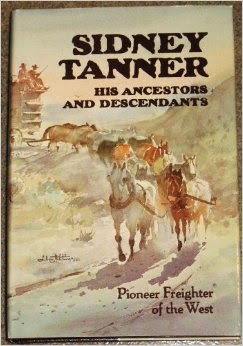
Commonly, we will focus on one or two individuals or families that seem to have disappeared from the records we can locate. In doing this, we neglect the basic research that needs to be done about every single member of our family stretching back into time. For example, I could focus on my Great-grandfather, Henry Martin Tanner, who had 17 children and spend a huge amount of time just accumulating the documents and records pertaining to that one family. We are aware of the geometric progression of the numbers of our direct ancestors, but often overlook the fact that as those numbers increase, so do the numbers of their children and grandchildren. Of those seventeen children of my Great-grandfather, fourteen lived to adulthood and had children. By the time those children got married and had their own families, that one family now contained hundreds of living and dead descendants all of whom are my cousins. In fact, the family book about his father, Sidney Tanner, printed in 1982, calculated that there were 1025 descendants of Henry Martin Tanner and that his father, Sidney Tanner, had, at that time, 5073 descendants. See De Brouwer, Elizabeth. Sidney Tanner, His Ancestors and Descendants: Pioneer Freighter of the West, 1809-1895. Salt Lake City, Utah (4545 S. 2760 E., Salt Lake City 84117): S. Tanner Family Organization, 1982.

In my experience, most researchers are content to ignore the descendants of their ancestors and focus only on their "direct lines." Even then, they also focus only on a few of those direct lines.

The new record hinting technology available in a few online genealogy family tree programs does not ignore these extended families. The programs systematically add record hints to every individual in your database. Now, you may want to quibble about the effectiveness or accuracy of the computer programs, but the results can become an object lesson in the way that we focus on our extended family. Currently, I have my basic family tree on the MyHeritage.com website. Since the implementation of the Record Match and Record Detective technologies, the number of Record Matches listed for my family has been climbing steadily despite the fact that I regularly spend time attaching those records to my ancestry. The number of suggested matches is presently 14,890 in 74 historical collections. Even if I discount that number by ignoring connections to other family trees, there is still an abundance of documentation for many, many members of my family tree.

I must admit, that I have included family lines in my family tree based on years of research. Many of these lines were added to my family tree merely because I ran across the the records in my research. I have not gone back and documented some of these collateral lines, simply because of lack of interest or time to do so. The record hint programs do not know my personal preferences. They just keep plugging along finding sources for everyone I have listed.

What am I supposed to do with this overwhelming number of suggested sources?

I can either ignore them or like some of my acquaintances simply refuse to use the programs, or I can become frantic and try to add all of them to my own records, or I can continue doing what I have been doing for the past 30+ years, systematically add sources to the individuals in my family tree and use the resources of MyHeritage.com and the other record hint programs as I need them. What I do not do is treat the abundance of record hints as a threat. I am very glad they are there. I can very likely find additional information about my family, if I choose to do so. But I do not let them control how or what I do with my family research and objectives.

However, if you are not a seasoned warrior in the genealogical battlefield, I strongly suggest you take advantage of these programs. If your family does not have published family history books and an existing base of records, the help these programs, such as MyHeritage.com, can provide is well worth the time and effort you take in entering your family members into the program.

One last caution, I suggest adding only a few names and generations of ancestors at a time. Most people who try to add their entire family file by uploading a GEDCOM file are soon overwhelmed to the point that they do not know what to do with the data. Take your time and add a little bit at a time. When you start to see sources being added, take advantage of the opportunity of attaching all of the sources to the individuals in your file. You may be surprised at the amount of information you begin to learn about your family.

As they say, your results may vary. If your ancestors are recent immigrants from a part of the world with few genealogically significant records online, you may not see sources. You may however, see connections to other relatives who share those ancestors and that is also a valuable resource.

Friday, April 3, 2015

Why Genealogy?

Listen to an audio file of this post on StoryPress at https://storypress.com/story/4237

Why, indeed! What is it that motivates people to research their ancestors? I am reminded of when I began my course of study at the University of Utah many years ago. For a number of what seem to me now complex reasons, as a new freshman, I enrolled in the Reserve Officers Training Corps or ROTC. At the time, the Vietnam War was just beginning to become news in the United States. Most of the young men my age were staring at the prospect of being drafted into the Army. I soon found out that by enrolling in ROTC, I had made a commitment and that I would be drafted immediately if I chose to quit the program. Of course, if I completed the program, I would also have to serve in the Army.

As a result of my decision, I had classes in military history and strategy for four years. I am very sure that absent the incentive of being drafted into the Army as a private rather than serving as an officer, I would not have taken that many classes on the history of warfare. As a result of all of these hours and hours of learning about history from ancient times to the present, I began to understand the connection between the two. I could see that decisions made many thousands of years ago could have a real impact on modern events. As I have mentioned in previous posts, all of this study of history kindled an interest in the cause and effect relationship of the past to the present.

This idea of a connection to the past was reinforced by my later legal training. In law school, we not only studied the connection of the past with the present, we used the principle of stare decisis or legal precedent to resolve current controversies by reference to historical court decisions.

These very intense and specific experiences in using history in a very practical and currently relevant way has helped to motivate me into the more personal investigation of my own family stretching back into the past.

If you know or can guess more about my background, you might attribute my interest in genealogy to my religious beliefs. You would be right in a sense, but it would be extremely simplistic to automatically equate my religious background as the entire basis for an interest in researching my ancestors. If there were such a direct connection, then members of The Church of Jesus Christ of Latter-day Saints, individually, would be much more inclined to involvement in genealogy than the rest of the population. It is true that there are individuals in the Church whose interest in family history stems entirely from a religious orientation, but by and large, genealogists both inside and outside the Church draw on other, more complex, motivations.

Investigation into the motivation of genealogists generally is almost entirely absent. One recent attempt is the following book,

Zerubavel, Eviatar. Ancestors and Relatives Genealogy, Identity, and Community. New York: Oxford University Press, 2012.

Eviatar Zerubavel is the Board of Governors Professor of Sociology at Rutgers University. One of the interesting things about this book is that a prominent genealogist, Megan Smolenyak,  dismisses the book with the comment that the author had neglected to speak to any genealogists. I would have to agree with Megan. However, my question would be, why would we suppose that genealogists would understand why they are genealogists? On the other hand, I would assume if you were writing a book about attorneys, you might want to know something about them and talk to a few. I think the same thing about genealogists.

The author points out early in the book that "our ancestral background affects not only how others see us but even how we experience ourselves." See page 5. I see much more to genealogy than simply a voyage of self discovery. As I learn more about my ancestors, I can become more closely connected to the present. The ramifications of investigating the past can be much more than simply opening a path to self-awareness, as Zerubaval points out, it can also be a way to construct a set of relationships. Unfortunately, his examples of how genealogy reacts with society are almost uniformly negative and are aimed at how genealogy has been used as a tool of political, cultural, and social repression. Perhaps this is a reflection of his lack of involvement in the actual process of genealogy. Contrary to the examples of the negative uses of genealogy in establishing social orders, clans and caste systems, genealogy can be and generally is a way to open the past and make it personal. It is one thing to learn about great military battles, it is similar but more relevant to learn about the struggles and conquests of our own ancestors.

I did not become interested in genealogy because of any of the bad uses that have been made of genealogy in the past. Genealogy opens history and history opens your world. Why genealogy? Because it is one of the few things I became interested in that was not age or time dependent. I can no longer ski down the face of High Rustler at Alta. I can no longer crawl through miles of caves or free climb cliffs, but I can delve into a fascinating world where my own ancestors come alive.


Thursday, April 2, 2015

Digitizing Genealogy -- Understanding and Using Scanned File Formats

When a scanning device or a camera creates a digitized file, that file must be stored on the device in some kind of file format. The most common format is referred to as the JPEG format. There are, however, dozens of different image file formats. The most common file types include the following;

  • TIFF -- Preferred archival format
  • JPEG -- A lossy file format
  • PNG -- Lossless but compressed
  • GIF -- A compressed file format, not preferred by archivists
  • RAW -- Used by higher end digital cameras
  • BMP -- Microsoft proprietary format
  • PSD-- Used by Photoshop

At this point the post could become highly technical. But the issues for genealogists, when they have a choice, should be to save their image files in the most accepted archival file format available. Unfortunately, many scanning devices and most digital cameras default to JPEG format.

My preferred source for information about digital preservation is the Library of Congress. The main reference is a section of the LOC.gov website entitled, "Sustainability of Digital Formats, Planning for Library of Congress Collections." I will refer you to the document itself, which is somewhat technical, but the summary of the summary is that TIFF images are preferred over any other type of file format. Most of the other file formats listed above are acceptable, but not preferred. The two file formats the Library of Congress deems unacceptable are the RAW format and the Photoshop file format PSD.

The issue here is sustainability. Will the file format be used in the future and will images stored in that format be able to be used by new computer devices in the future? The important terms here are "lossy" and "lossless." These are complicated terms and deal with the fact that lossy file formats lose information (quality, resolution etc.) as they are edited. Lossless file formats, such as TIFF files, do not lose information. Additionally, compressed files also involve a trade-off between file size and quality. Compressing a file so that it takes less storage room on a hard disk or other device, necessarily affects image quality. There is a way to avoid losing quality with compression and the JPEG 2000 file format claims lossless compression, although you may have some trouble finding a program that supports this file format.

What this boils down to for genealogists is that we need to use the most common and most highly supported file formats available to us and we also need to be aware of the file formats supported by the programs we use to store our data.

There are dozens (hundreds?) of image programs available today. Many of these programs such as the high end Adobe Photoshop and the lower end Photoshop Elements, can save files in a variety of file formats. Many other programs will convert images from one format to another. Just remember, you can't get blood out of a turnip. If your image was created in a lossy file format such as a JPEG file, subsequently saving the file as a TIFF file may help, but the quality of the image is determined at the time the image is created by the scanner or the camera and the file format will not improve that quality. It may help to preserve or not help depending on the circumstances, but the initial file creation is what is important.

Here is a list of the previous posts in this series.

http://genealogysstar.blogspot.com/2015/03/digitizing-genealogy-flatbed-scanner.html
http://genealogysstar.blogspot.com/2015/03/digitizing-genealogy-introduction-to.html
http://genealogysstar.blogspot.com/2015/03/digitizing-genealogy-understanding-dpi.html
http://genealogysstar.blogspot.com/2015/03/digitizing-genealogy-beyond-resolution_8.html
http://genealogysstar.blogspot.com/2015/03/digitizing-genealogy-beyond-resolution.html
http://genealogysstar.blogspot.com/2015/03/digitizing-genealogy-resolution-is.html
http://genealogysstar.blogspot.com/2015/02/digitizing-genealogy-scanners-vs-cameras.html
http://genealogysstar.blogspot.com/2015/02/digitizing-genealogy-what-is.html
http://genealogysstar.blogspot.com/2015/02/digitizing-your-genealogy-files.html

The Death of Internet Explorer

Microsoft is scheduling the release of Windows 10 later this year (2015). You can see what is coming in Windows 10 on the Microsoft Windows Insider Program. There is some online discussion about the fact that the new release of Windows 10 will be the end of the Internet Explorer browser. You might have noticed my comments recently about the analytics.usa.gov website. That website clearly indicates that the Internet Explorer browser is on its way out. The latest version, IE 11.0 has only about 14.9% of the browser market with Google's Chrome and Android versions at about 38%.

The new Microsoft browser is reported to be code named Project Spartan. See "This is Spartan! But is it the end for Microsoft's Internet Explorer?" Here is a YouTube.com video on Project Spartan:


What does this mean to genealogists? I find that many in the genealogical community have only the vaguest understanding of the inner workings of the there computer's operating system and how it interacts with the online world. The browser is the program that enables your device (desktop computer to mobile device) to talk to the online world out there on the Internet. Computers and devices that use Microsoft Windows have traditionally come with Internet Explorer pre-installed, just as Apple devices have come with the Safari browser. The world of browsers got more complicated when Google introduced its Chrome browser and as you can see, Chrome has rapidly moved into an dominant position.

Genealogists are the proverbial hair on the end of the dog's tail when it comes to computers. We move with every wag and shake of the computer market but have no leverage or input because of our diffuse and relatively small consumer base. If all the genealogists in a community suddenly decided to buy new computers, it probably wouldn't be noticed even if they all bought one at the local Walmart.

But from the standpoint of the genealogists, these new movements in the market are particularly troublesome. As I have pointed out many times in the past, many older genealogists (and some younger ones) struggle with technology. A major shift in the way devices operate will only complicate the issue. It will also mean that the developers of genealogy software will face yet another round of upgrades and attempts to implement the new features. Those computer users still running Windows Vista and XP will fall another generation behind the current systems and we will ultimately have data migration issues.

Using Pictorial Maps

(London Theatreland 1915). "The Westminster Press" have exploited me, for the Underground Railway Company, who bid you now come to the Theatre Land - To one of the theartes - Drawn by the hand of MacDonald gill. 1915.
Pictorial maps are also called illustrated maps, panoramic maps, perspective maps, bird's-eye mpas and goepictorial maps. See Wikipedia: Pictorial maps.

Pictorial map of Canonsburg, Pennsylvania from1897 by Thaddeus Mortimer Fowler & James B. Moyer.
It is necessary to view these maps at magnification to see the tremendous amount of detail. I became fascinated by pictorial maps from a map published by the Arizona Highways magazine from a map published in 1940 by George M. Avey. That map is still being published and sold by the Arizona Highways magazine.

There are thousands of these maps for places all around the world. The Cannonsburg map above shows the houses and even the outbuildings:


I would suppose that many genealogists would think that this type of map was nothing more than a novelty. But the perspective and historical views can often clarify details about the places where your ancestors lived. In any event, it is probably a good idea to lighten up once and while and add a little variety to the cloistered life of the seasoned, research genealogist.

Here are some websites with maps and/or explanations about the maps.

George Glazer Gallery
David Rumsey Map Collection
Biblio.com Pictorial Maps - United States
Library of Congress Map Collections


Wednesday, April 1, 2015

Get started now with the AncestorCloud Marketplace


For sometime now, I have been hearing about a new startup concept called AncestorCloud.com. The company was at RootsTech 2015 and you might have seen them there. The video above explains the service. 


AncestorCloud.com is essentially building a marketplace for buying and selling genealogical research, tasks, assistance, lookups, gravestone images, research questions, putting bounties on ancestors and a whole lot more. The AncestorCloud community will connect genealogists globally based on their expertise, needs and physical location. If you need a research project done, half way around the world, the AncestorCloud will provide the contact. The website is going live today.

Initially, the website will be dedicated to building a database of beginners, professionals or hobbyists. An AncestorCloud.com account is free; forever. This is the first step. AncestorCloud already has a base of genealogists from eight different countries waiting to provide services.

Once the genealogists are in place, the marketplace will open and individuals can connect and open an account. The marketplace allows genealogists to both offer services for a fee and also purchase services for a fee.


Interested genealogists or researchers can search in multiple ways to find other genealogists that they can contact or ask for help; they can browse globally individuals in different areas of the world.


Whether you need help or think you would like to help someone else out and get paid for your services,  join the community


You can become either a seeker or a helper.


I have a huge pile of genealogy stuff, what do I do with it?

By Veronidae (Own work) [CC BY-SA 3.0 (http://creativecommons.org/licenses/by-sa/3.0)], via Wikimedia Commons
The title of this post addresses issues that are both theoretical and practical. It also raises issues that deal with deep psychological, cultural and social issues. There is a fine line between collecting and hoarding. I see an extremely huge disparity between what some people consider an excessive amount of genealogy related documents, paper etc. and what others consider acceptable. I have dealt with people who have one small box of documents, photographs and papers and are obsessed with all the clutter. When collections get big enough, we call them libraries and museums.

It is also my experience that few genealogists face the inevitable. We are all going to die, just like all our ancestors. There are two main strategies for coping with the inevitable; pass the work along to someone else or transfer everything to a publicly available repository. The key to success in doing either is to confront the issue long before it becomes a crisis. Unfortunately, there will always be those people who are so possessive and obsessive that they antagonize other family members to the point that no one in the family cares about their work and are glad to get rid of it when they pass away, no matter how "valuable" it may actually be. If you are one of these possessive people, you will not at all be interested in what I have to say on this subject. Genealogists can become as mentally ill as anyone else in the population.

The issue here is both a matter of scale and quality, hence the one box issue I already mentioned. But first a few definitions for clarity and convenience.

Genealogical data can consist of both original documents and copies. Some documents can be a copy and an original at the same time. For example, an original handwritten family group sheet could be a treasured document from an ancestor, or it could be merely a copy of information from an easily available source. Think of a family Bible record written by a great-great-grandmother. Most genealogists would treat this as a family treasure. But what about a pile of photocopies made from documents in the Family History Library in Salt Lake City, Utah? The disparity should be obvious.

The real question starts with the idea of whether or not the items in the collection can be easily replaced. Are they unique or merely copies of records that can be obtained by some minor effort? Do the items have real sentimental value?

At this point, I need to clarify the concept of a collectable. People collect everything you can think of. One person I know had a huge collection of thousands of the commercial paper toothpick containers you can pick up in restaurants. Genealogical collections must be judged by their content. A pile of paper may be impressive, but does the content have any real genealogical value?

I have people come to me all the time with an old floppy disk full of "valuable" family data they entered into a computer years before, only to find out that the disk contains a few hundred names of recent family members with no sources or documentation. Further, in a few minutes, we find the same information readily available online in any number of family trees. Sometimes the individual genealogist or his or her family are not in the best position to determine the value of the work that has been done.

The basic concept involved in a preservation effort is to digitize the items, make sure the digital copies are in a permanently maintained collection such as the FamilySearch.org Family Tree and then provide for the conservation and preservation of the originals. I find it incredible that someone would spend their entire life gathering documents and information about their family, only to act defensive when someone shows an interest in preserving it all.

Let's look at the pile and what it may contain. In each category, I will comment on the value of the items.

Category One: Original artifacts, documents and photos
You should always take definite steps to identify and preserve all of these items. These items should also be photographed and digitized and included in an online repository such as the FamilySearch.org Family Tree. Labels, descriptions and stories should accompany any such objects or documents. For detailed instructions, see the Library of Congress Preservation website. Some really valuable items or documents should be given to repositories such as university special collections libraries and museums.

Category Two: Genealogical notes and gathered information
Too many of us, myself included, spend all our time gathering more data when we really need to focus on what we have already gathered. I am overwhelmed when I see the amount of information some people, myself included, have gathered and failed to organize or preserve. The real question about this category of items is whether or not anyone can "pick up" where I left off? This is one of the most persuasive arguments for collaboration.

Category Three: Items of interest
We all have that pile of stuff we find interesting or helpful, notes, papers, copies of programs, syllabus material, handouts from conferences etc. This is mostly junk and will not be missed by posterity.

Category Four: Books and publications
Books are books. Some books have value as books, others only have value for the material contained therein. Genealogy surname or histories should be donated to a library, digitized and put online or otherwise disposed of. Unique publications, such as privately published family histories can be donated to libraries where they can be digitized and further preserved, but the rest of the books should be treated as books.

The concept here is to take the time to evaluate the pile and take steps to move it, throw it away or organize and categorize it before you get too old or die. Get busy.