Some people eat, sleep and chew gum, I do genealogy and write...
Showing posts with label FamilySearch. Show all posts

Thursday, March 26, 2015

Who Owns the Genealogy Companies -- An Update -- Part One

It has been a couple of years since I went through the process of analyzing who owns the various online genealogy companies. Since my last posts on this issue, there have been several notable acquisitions. The larger companies continue to expand. The notable exception, of course, is FamilySearch, International, which is a wholly-owned subsidiary corporation of The Church of Jesus Christ of Latter-day Saints. FamilySearch International is listed as first registered in 1999 and is doing business as FamilySearch and the Genealogical Society of Utah. In fact, FamilySearch was formerly known as the Genealogical Society of Utah and the name "FamilySearch" was first used by that organization that began in 1894.

The organization and the acquisitions of the other large companies are much more complex and more difficult to reconstruct. Some of the acquisitions over the years have not been well publicized. Current ownership is usually a larger corporation or an investment group. Some of the acquisitions have been substantially modified or even completely absorbed by the new parent corporation.

The current genealogical scene is further complicated by the fact that some of the companies have partnerships or "strategic alliances" with other companies. FamilySearch has been particularly aggressive in seeking these partnerships, some of which have been well publicized. Since my last post on this subject, these partnerships have become a major factor in the expansion of all of the larger companies and many more of the smaller companies. With the larger companies, the partnerships involve a trade of genealogical record accessibility for technological assistance primarily through providing indexing services.

In the past, response to my posts has included a measure of paranoia from certain commentators. It is usually evident from the content of the comments that the individuals involved in making these comments about possible conspiracies are entirely ignorant of genealogy as an activity and are merely making their comments based their impressions of large corporations in general or, in some instances, prejudice against the owners of the companies or some-sort-of imagined agenda.

Another area of concern by commentators has been the issue of the ownership of genealogical records per se. There is a certain segment of the online community that believes that any information, no matter how acquired or designated, should be entirely free and so a certain amount of ire is directed at the large companies simply because they exist. This attitude also shows a marked degree of ignorance of the way records are created and maintained. Record repositories have very substantial overhead expenses and the cost of maintaining, cataloging, indexing and providing access to billions of records is enormous. These costs have to be covered by subscription or donation. These commentators also wrongly discount the cost an individual would have to pay to acquire access to these records before they were made available online.

That said, here is the current list. As usual, if there are any omissions, I would be more than happy for constructive comments.

Ancestry.com

I may as well start with the most popular and what is claimed to be the largest online supplier of genealogically related records. Quoting from the Ancestry.com website, "About Ancestry,"
Our revenues have increased from $225 million in 2009 to $620 million in 2014. The company is majority owned by Permira funds, along with certain minority co-investors.
Ancestry.com was for a time, a publicly owned stock corporation. The purchase by Permira Funds took the company private.  Permira is described as follows on their website:
Permira is an international private equity firm. Since 1985, the funds have made over 200 private equity investments with a focus on driving transformation to build better businesses.
 Permira has a rather long list of investments and Ancestry.com is one of the largest. Most of the companies are unfamiliar to me and are outside of the United States. Permira currently has fourteen offices, all of them outside of the U.S.

Ancestry.com has a long list of subsidiary websites that it has established or acquired. Here are the ones I have been able to find. The international websites are quoted from the Ancestry.com International list.
Ancestry™Ancestry, launched in 1996, hosts the world's largest online collection of family history records - currently more than 14 billion, including the complete US Federal Censuses, US immigration records, military records from as far back as the Revolutionary War, and also many exciting collections from around the world.
Ancestry.co.uk™Ancestry.co.uk, launched in 2002, hosts the UK's largest online collection of family history records with more than 1 billion searchable records including England, Wales and Scotland Censuses, exclusive online access to UK birth, marriage and death records, plus a comprehensive selection of WW1 military, immigration and parish records.
Ancestry.ca™Ancestry.ca, launched in 2006, is the leading Canadian family history website with 235 million family history records including exclusive online access to the Censuses of Canada, the Inbound Passenger Lists and Ontario and British Columbia vital records. The site is in both English and French language.
Ancestry.com.au™Ancestry.com.au, launched in 2006, is Australia's most popular family history website and home to more than 2 billion Australian and UK family history records which includes Australia's largest online index of birth, marriage and death records, the most comprehensive online collection of Convict and Free Settler records, the Australian Electoral Rolls, plus parish records, newspapers and much more.
Ancestry.de™Ancestry.de, launched in 2006, is the first website to host a significant collection of German family history records - currently more than 185 million, including the Hamburg Passenger Lists, both the German Phone and City Directories, plus international censuses, military and parish records with German relevance. The site is in local language.
Ancestry.it™Ancestry.it, launched in 2007, hosts more than 20 million Italian family history records including civil registration records of births, marriage banns, marriages and deaths assembled from provinces across Italy, plus international immigration and census records with Italian relevance. The site is in local language.
Ancestry.fr™Ancestry.fr, launched in 2007, hosts more than 40 million French family history records including Paris vital records of births, deaths and marriages from as early as 1700s and other civil registration records from a variety of French provinces, plus international immigration and census records with French relevance. The site is in local language.
Ancestry.se™Ancestry.se, launched in 2007, hosts more than 220 million Swedish family history records including immigration records from as far back as the early 19th century, Varmland church records from the 1600s, plus international censuses and vital records with Swedish relevance. The site is in local language.
Here are some of the other websites owned by Ancestry.com
Ancestry.com has made several other purchases in the past of websites that are no longer online. 

In the next post in this series, I will take a look at some of the other websites. 

Friday, March 13, 2015

New Features added to FamilySearch Family Tree

Steve Anderson of FamilySearch posted a blog entitled, "What's New on FamilySearch -- March 2015." Most of these new features have not be previously announced publicly. Some have been around long enough for current users to notice and comment on but others have passed unnoticed. In two recent presentations from FamilySearch representatives, they both stated that FamilySearch is making updates to the FamilySearch.org website three times a day. Most of the current changes are explained in the opening statement of the post:
Each month, FamilySearch publishes a list of new changes and updates to the FamilySearch website. This list includes changes to Family Tree as well as other parts of FamilySearch. In some cases, these changes will also be published as individual articles where the needs to do so exists.
The bulk of the current changes seem to be to the memories feature. Here is the list provided by the post:
  • More consistent website and mobile experiences
  • An improved Report Abuse process
  • Support for images up to 15 MB and in TIF and BMP formats
  • A new read-only Memories system
  • The link colors, Save buttons, and menu system are consistent for all the Memory types (photos, stories, documents, and audio) and the rest of the site
  • The time stamp is easier to read (the time now displays with a HH:MM time in the local time zone)
  • The Comment section is consistent for all memory types (photos, documents, stories, and audio)
  • Report Abuse was changed so that it is the same on all memory types and on Family Tree (and it captures all pertinent user feedback)
Here are the other, more general changes included in the March 2015 list:
  • An Improved Report Abuse Process
  • Support for Images up to 15 MB and in TIF and BMP Formats
  • The Memories system now allows you to upload images up to 15 MB (the previous limit was 5 MB). You may also use two additional file types: TIF and BMP.
I have no idea what some of these changes are. For example, "A new read-only Memories system?" The explanation is interesting. It says the following:
A New Read-Only Memories System
In the past, during a system outage, you could not access the Memories content. A new read-only Memories system has been created so that if there is a planned or unplanned system outage, you will still be able to view the Memories content.
I don't understand how I am supposed to be able to view the Memories content if FamilySearch has a "system outage?" If their system is down, how do I see anything? I can only guess that they put the Memories section on a backup system that they hope does not go down at the same time as the main system.

I applaud the inclusion of TIFF images in the Photos section. Now I won't have to convert so many of my photos. The file size increase also helps with getting better quality online images.

In the body of the post there are several other changes not in the two lists. The biggest change is the inclusion of a link on an individual's Detail page that shows the user's relationship to the ancestor. This is really helpful for those of us who get lost in the Family Tree. It should also tell users whether or not they are really related to anyone in the Family Tree.

There is also a new procedure for changing a person's status from deceased to living. Here is the explanation:
Changing a Person’s Record in Family Tree from Deceased to Living 
Changing a person’s record in Family Tree from deceased to living is now easier. 
Occasionally a living ancestor in Family Tree is listed incorrectly as deceased. You had to report the problem, and it had to be corrected by a system administrator. Now, if you added the person to Family Tree, and no other user has changed the person’s information, you can change the person’s record from deceased to living. 
Important: If someone else added the person to Family Tree or another user has changed information, you will still need to report the problem to our support staff so that a system administrator can correct it.
Actually, this post misses the major change to the FamilySearch Family Tree interface that is taking place in stages. It also doesn't mention the changes to the lists, but that may have occurred in February or before. There is no real way to tell when a change takes place unless you are one of the very first to notice it and even then you may just have not used that part of the program for a while.

New Partner Certifications on FamilySearch Family Tree

In a blog post entitled, "Partner Certification News -- March, 2015, Gordon Clarke announced the following:
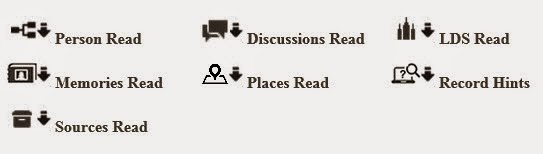
FamilySearch works with a variety of partners to help provide you with as many ways as possible to find, add, and share about information about your family members. FamilySearch is pleased to announce AncestryCloud, Eternal Reminder, Family.me,Life’s Journey Game, and Scrambled Tree Game are now Read certified. “Certified” means the product is compatible with FamilySearch.org and has features that conform to our strict standards of quality.
Here are the links and the product enhancements that led to additional product certifications quoting from the blog post:


AncestryCloud is now Places Read certified. All persons born or naturalized in the United States, and subject to the jurisdiction thereof, are citizens of the United States and of the State wherein they reside.

Eternal Reminder now Person and LDS Read certified. Eternal Reminder helps you remember to take the name of an ancestor that hasn’t yet turned 110 years old to the temple. All that’s required is to sign in with your FamilySearch account and type the ID number of your ancestor. Once your ancestor turns 110 years old, you will be sent and email reminding you to reserve the temple work.

Family.me is now Person Read certified. Family.me is a private social network where families come together to discover, share, and preserve their memories.


Life’s Journey Game is now Person Read certified. This AncestorGuru.com game helps you become more familiar with important events in your ancestors’ lives.


Scrambled Tree Game is now Person Read certified. This AncestorGuru.com game helps you become more familiar with your ancestors’ names and faces, and how you are related to them.

This image means that the app can do the following:

This image means that the app can do the following:


Wednesday, February 18, 2015

FamilySearch Suggests African American Genealogy Resources

A recent blog post from FamilySearch.org entitled "Top African American Genealogy Resources to Follow on Social Media" provides links to a list of blogs, forums, podcasts, and genealogies leaders that are intimately involved in African-American genealogy. As I watch the stream of blog posts, emails, Facebook posts, Google+ posts and all of the other social media outlets I monitor pass by each day, I'm sometimes in a quandary as to whether or not to reproduce the notice in its entirety or simply post links to pertinent information. Sometimes my posts are compromise between copying the entire article and posting excerpts.

In this case, the entire blog post by FamilySearch is of interest. So, in the interests of brevity, please click on the link above to read the article in its entirety.

Wednesday, February 11, 2015

FamilySearch Opens First Discovery Center in Salt Lake City

I have been hearing about the FamilySearch.org Discovery Center concept for more than a year. This has also been the topic of conversation at the Family History Centers and among Church Service missionaries. Today, the first Discovery Center opened to a major media event at the Joseph Smith Memorial Building in downtown Salt Lake City, Utah. Here is the official announcement:
In concert with the world class RootsTech 2015 conference and RootsTech Innovator Summit in Salt Lake City this week, The Church of Jesus Christ of Latter-day Saints opened the doors today to its FamilySearch Discovery Center. The new center is the first of its kind and uses the latest technology to give patrons a personally immersive experience into their family’s history—think of it as a Star Trek–meets-genealogy type of experience. The free service enables patrons to interface with large-as-life interactive displays that use patrons’ online family history at FamilySearch.org to give them unique discoveries and experiences with their family’s history. There are also fun, hands-on activities for young children that encourage family discoveries. The Discovery Center is located in the Joseph Smith Memorial Building. Walk-ins are welcome, but it is recommended that individuals, families, and groups reserve a time at FamilySearch.org/discoverycenter.
“We have tried to create experiences where everyone, regardless of age, can learn more about themselves and their family in new and interesting ways. And patrons who are attending as families can make fun new connections and strengthen their family bonds,” said Dennis Brimhall, chief executive officer of FamilySearch. 
The concept for the Discovery Center began over two years ago when FamilySearch decided it wanted to begin redesigning patron experiences in its 4,800 family history centers worldwide. “We wanted to get families and youth more engaged and excited about their family history,” said Brimhall, noting that the Salt Lake City center will continue to serve as a primary development and testing facility to create and improve new experiences that can then be offered online at FamilySearch.org and other center locations worldwide. 
Merrill White, a manager for the Discovery Center, said, “It’s fun to see youth groups and families laughing at the experiential stations and hollering across the facility for others to come see what they discovered about themselves or their family’s history. We like to see them surprised at how fun their family history can be.” White said visitors typically have no problem utilizing the entire hour they are scheduled for in the center. 
At the center, patrons are issued a custom iPad that guides them through 7 stations and gives them a unique, personal experience based on family and relevant historical data found online. There are also fun “nontechnology” activities that can introduce participants to fun and interesting discoveries or connections. A very large “Jenga-like” game invites participants to share family experiences from prompts engraved on large wooden blocks. Another experience features a wraparound theater screen which helps users see how much home life has changed over the centuries and gives a glimpse of what life might have been like for their ancestors. 
Two video recording studios encourage return visits to help patrons record their history individually or with other members of their family. The fun design and equipment allows patrons to duplicate the fun of favorite family memories that are spontaneously shared in nostalgic family gatherings. The recordings can then be preserved online for future generations to enjoy. 
Another Discovery Center has been announced for Seattle, Washington, in the summer of 2015. The FamilySearch Discovery Center is free to the public and open Monday through Saturday. Walk-ins are welcome, but registration is recommended—particularly for family or youth groups. Visits can be scheduled at FamilySearch.org/discoverycenter.

Thursday, February 5, 2015

FamilySearch Family Tree shows up in MyHeritage Record Matches

In some cases, when I am helping patrons at the Brigham Young University Family History Library  (BYU) to get started with their family history, I am finding that the fastest and most impressive way for them to get started is by entering some basic family data into MyHeritage.com. Usually, by the time the patron has entered some basic information about parents and grandparents, MyHeritage.com has started suggesting Record Matches. This particular process went into overdrive starting last evening when Record Matches for FamilySearch.org's Family Tree started appearing.

Because I am helping at the BYU Family History Library in Provo, Utah, nearly all the people we are helping turn out to be members of The Church of Jesus Christ of Latter-day Saints (Mormons) but from what I have seen and what I know is on FamilySearch Family Tree, I am certain that the addition of the search to MyHeritage.com of the Family Tree will immediately start benefiting those who are not members of the Church also.

The event last evening was a group of Young Women from the Church who were learning about FamilySearch Family Tree for the first time. One of the leaders was having some difficulty with finding information in the Family Tree because her family had recently immigrated from Switzerland. I suggested she start a family tree on MyHeritage.com and in a matter of a few minutes, she was getting Record Matches and building a family tree from sources supplied by the program. Then, suddenly, a Record Detective match appeared for a link to the FamilySearch Family Tree. She confirmed that the information in the Family Tree was correct and was able to move that information over for her grandfather. The additional information from the Family Tree program helped to kick-start the acquisition of even more sources from MyHeritage.com. Almost immediately, the Record Matches started appearing faster than she could review them. She was astonished at the rapidity of the program in building a family tree. Unfortunately, we had just gotten started when we ran out of time.

I tried another search in MyHeritage.com just as I was writing this post. I looked up my Grandfather, Leroy Parkinson Tanner. I already had a number of sources attached, but found new suggestions from the Record Match feature of MyHeritage.com waiting for me. When I confirmed a U.S. Census record, I waited for a few seconds and then 38 additional matches appeared in the Record Detective results. Here is a screenshot showing the Record Detective:


I have found that the MyHeritage.com family tree has to be "primed" a little to get started. Depending on the area of the world where the ancestors live, the user may need to add a little more information from his or her own records before the automatic search kicks in. But once it does, the results can start to be impressive. I am certain that some people will not have this kind of response from the program. Their ancestors may fall outside the huge collection of records on MyHeritage.com, but I can say that nearly all the people I have helped recently have not found that to be the case. Remember, to examine the suggested records carefully to make sure they are the same person as the one in your family tree.

When I looked today, I did not see any Record Matches with the FamilySearch.org Family Tree as yet, but it looks like they will be forthcoming shortly given my experience last evening.


Tuesday, June 17, 2014

FamilySearch Family Tree Hints Now Showing on Tablet

Guest post by Amy Tanner Thiriot

FamilySearch announced at the end of May that it would be adding a "hints" feature to Family Tree. I pulled up Family Tree this afternoon on my tablet and saw the new hints. I had just been working on my desktop and hadn't seen it, so I checked back there and didn't see any, so this great new feature is currently on my tablet but not desktop version of Family Tree. I imagine it will be coming soon to the desktop version of Family Tree.

Here is a quick example of the Record Hints feature. 

My fourth great-grandfather Joseph George Defriez (1821-1887) worked for many decades as a parish doctor and surgeon in London's East End. He provided primary care, did surgery, attended women in childbirth, did postmortem examinations for murders, and provided medical care during cholera epidemics.

His entry has already been sourced, but FamilySearch came up with an additional recommendation.


I clicked on the link and reviewed the source. The name and date and place of his marriage to Mary Ann Godfrey were all correct, so I added the source to Joseph's entry.


With that source processed, his Record Hints section now says, "There are no pending record hints for this person."


This is what his entry looks like right now on my desktop computer, with the new source added and no Record Hints section showing yet.


Now that I've figured out how that works, I'm mostly going to leave the hints alone so other relatives can have the experience of adding sources to entries, and then when I get my weekly email of changes to watched entries, I'll review the added sources and make sure they're correct.

Wednesday, April 22, 2009

Brazil Collection Expanded

FamilySearch's Record Search Pilot announced the expansion of the Brazil, Rio de Janeiro Civil Registrations 1889 to 2006 collection. The collection has been expanded by over 50% to nearly 4.5 million images. The images can be browsed by municipality. These records were available previously only online by paying a fee.

I have mentioned this previously, but these collections from the Record Search Pilot constitute the first time South and Central American records have be generally available in digitized format on the Internet.

Monday, April 20, 2009

Contributing to the Pedigree Resource File

The Church of Jesus Christ of Latter-day Saints (LDS) has long maintained an online database called the Pedigree Resource File (PRF). This is a user contributor file to which all are encouraged to contribute and upload files. The uploaded files have been published on a series of CDs (now DVDs) essentially in the format they are contributed. An Index of the uploaded files is contained on the FamilySearch.org Website.

With the introduction of New FamilySearch (NFS), some of the files contained in the PRF were incorporated into the huge NFS database. In a NFS Help Center document, "Understanding How Information from Ancestral File, Pedigree Resource File, and the International Genealogical Index Was Added to FamilySearch" the Church said:
  • Information that was published in Ancestral File, including corrections, will appear both as it was originally contributed and as it was later merged and displayed in Ancestral File. You will see notes and sources if they were provided in the original contribution. In addition, information and corrections that were never published in Ancestral File are also included.
  • Many contributors provided the same information multiple times to the Pedigree Resource File. They often did this to provide additions and corrections. These multiple contributions have been combined in FamilySearch. If information changed, you will see the most recent version of the information. You will also see notes and sources if they were provided in the original contribution.
  • Information from the International Genealogical Index has also been added to FamilySearch. You can correct the genealogical information but not the ordinance information.
There are currently over 140 discs of PRF files. But Document ID: 102740 of NFS states that the PRF was only loaded into NFS up to disc 85. This Document goes on to state:
Although all of the Pedigree Resource File discs have not been added to the new FamilySearch, you may still submit to the Pedigree Resource File through www.familysearch.org. It is a great research tool that can be purchased by anyone from Distribution Services.
Unresolved is the issue if future submissions to the PRF will be incorporated, in the future, into NFS. Also unresolved is the issue of the future of the PRF.

Friday, April 17, 2009

Substantial update and corrections to FamilySearch Record Search Pilot

FamilySearch's Record Search Pilot's collection of databases has had a substantial correction and update. Announced in a statement dated April 15, 2009, eighteen different collections were updated and corrected.

The collections updated include the following:

1920 US Census -- now 21% complete (no images)
Arizona Deaths 1870-1951
Arkansas County Marriages 1837-1957
California, San Francisco Area Funeral Home Records 1835-1931
Florida State Censuses for 1855, 1935 and 1945 (images only)
Illinois, Cook County Birth Registers 1871-1915
Louisiana War of 1812 Pension Lists (images only)
Michigan Marriages 1868-1925
Ohio Tax Records 1816-1838
South Dakota State Censuses 1905, 1915 and 1925
Utah, Salt Lake County Death Records, 1908-1949 (no images)
Wisconsin State Censuses, 1855, 1875, 1885, 1895, and 1905 (images only)

Also

Brazil, Rio de Janeiro Civil Registrations, 1829-2006 (images only)
Costa Rica Church Records, 1595-1992

As a researcher who does work with in Hispanic records, I would note that these Latin American records are some of the first to be readily available in a major digitized collection.

Monday, April 13, 2009

Transitioning from PAF -- Part Two

Economically, free is hard to beat. The fact that Personal Ancestral File is essentially a "free" program makes for a difficult sell. As it states on the FamilySearch Website:
Personal Ancestral File (PAF) is a free genealogy and family history program. PAF allows you to quickly and easily collect, organize and share your family history and genealogy information.
It also helps that FamilySearch has a Google Page Ranking of 7 out of 10, and according to Statbrain, gets about 44,000 visits per day. It also helps the popularity of the program that thousands of LDS Church Family History consultants help people download and use the program.

As a volunteer in the Mesa Regional Family History Center, I teach many classes supporting PAF and commonly find that PAF users are not even aware that they can use an alternative program. Many of the users are older computer users that only have a vague concept of the whole idea of computer programs. Even if the PAF users are familiar with purchasing software, one of the very first questions asked is how much will it cost me every year to keep current. By and large, at least from my perspective, genealogists are not wealthy people and they are mostly very budget conscious. This seems like a huge obstacle for third party program promoters to overcome.

Another issue with PAF users is that they are accustomed to the program and cannot visualize how some other program might be better or easier to use. When I demonstrate third part software, many PAF users comment that they didn't know what they were missing. If I teach a large group of people and ask how many use some other program besides PAF, I might get one or two out a group with most of the students not understanding what I am asking.

Although the LDS church has a link on its New FamilySearch Website that is called "More Great Products," most of the users of New FamilySearch in my classes have never clicked on the link. It is interesting that the New FamilySearch Website has this link, because as long as the PAF program is readily available for free, there is little incentive for any of the users to purchase the new programs, even if they are demonstratively superior in almost every way. I assume that this fact has been discussed by all of the parties involved.

One issue that will become a factor as time passes is the incompatibility of PAF with other programs and with the New FamilySearch program itself. For example, New FamilySearch uses a Person Identifier Number to specify each individual copy or file of an individual stored in the database. Two of the newer programs that synchronize with New FamilySearch, RootsMagic 4 and Ancestral Quest 12.1, automatically incorporate those numbers into the local file when the file is synchronized with New FamilySearch. However, when you export the file from either program and import the subsequent file into PAF, PAF has no field for the number and so the information is lost.

One program that has partially solved that issue is Family Insight from Ohana Software. As a PAF add-on it creates a special field in PAF for the Person Identifier Number.

This may not seem like much of an issue, but the whole New FamilySearch program is keyed into using these Person Identifier Numbers. Obviously, you solve this problem by moving to a third part program.

More to come.

Sunday, April 12, 2009

Transitioning from PAF -- Part One

Personal Ancestral File (PAF), a lineage linked database program, was first released in 1983 in a text only version. The current version of the program for Windows is 5.2.18.0. (There is a multi-language version, 4.0.4.18). The Macintosh version of the program no longer works with the most recent Apple operating systems. The last update to the program was released on July 23, 2002.

There are no statistics available as to the number of PAF users but it is undoubtedly the most used genealogy program available. Many PAF users are totally unaware that other genealogical database programs even exist. There are two main reasons why PAF has achieved such dominance, first it was distributed for free or for a very nominal price by The Church of Jesus Christ of Latter-day Saints (LDS) and secondly it was extensively supported by the LDS Church Family History Centers. There are also numerous PAF Users Groups scattered across the world.

The official position of the LDS Church is that FamilySearch is developing Web-based genealogy systems. A search of the help system for New FamilySearch gives the following statement:
What is the future of PAF?
  • Is PAF compatible with the new FamilySearch?
  • Does the new FamilySearch replace PAF?
  • Is PAF dead?
  • Is PAF being dropped?

PAF Is Still Needed
PAF is one of the genealogy database programs that can produce GEDCOM files, which can be uploaded to the new FamilySearch.While there are no plans to further develop PAF, it remains a dependable and easy-to-use program. Users of PAF can receive support by telephone or e-mail, as well as through the knowledge base in the Product Support section of www.familysearch.org. Local support may also be available at a family history center or from a family history consultant. There are also inexpensive utility programs that provide enhancements. These include PAF Companion, PAF Insight, and PAFWiz. PAF Insight and PAFWiz do not receive technical support from the Church. For more information regarding these products, go to the respective Web sites.

If a PAF user later decides to switch to a different program, his or her data can be exported as a GEDCOM file and then imported to any commercial genealogy database program that uses GEDCOM. Some of these programs have the ability to import a PAF file directly so the data does not have to be reentered but can simply be loaded into the new program.

PAF and the New FamilySearch Are Complementary Products
PAF stores a wide range of data with sources and voluminous notes. With it, users can perform advanced searches of data and can print a variety of reports, including books. PAF has a built-in "Print-to-file" (RTF) feature, which allows users to create electronic copies of reports and charts that can be sent as e-mail attachments. If a free PDF writer such as PrimoPDF or CutePDF is installed on the computer, PAF can use it to create PDF copies of reports and charts that could then be e-mailed or even posted to a Web site. PAF has a Preview feature that allows users to see a report before they print it. Users can also link multimedia files to their PAF data. Many of the personal genealogical databases on the Internet were created using PAF.

The New FamilySearch Will Play a Different Role
The new FamilySearch will replace TempleReady. You will be able to prepare names using the new FamilySearch and then take them directly to any temple (you willnot have to take them to a family history center anymore). The new FamilySearch will make it easier for you to work with others on ancestral family lines since you can all access the same information. You will be able to see where individuals fit in the context of their whole family, unlike the IGI, which shows only individual births, marriages, and deaths. The new FamilySearch will also allow you to challenge errors that have been made and to work to correct them. As the program continues to be developed, the role of the new FamilySearch will certainly increase.
The transition from PAF to third party programs is well along the way. Unfortunately, there are some severe obstacles for present PAF users, many of whom lack even the concept of a different program. Future posts will explore the challenges faced by present PAF users and give suggestions about the transition.