Thursday, July 30, 2015
Mac Version of Ancestral Quest Coming Soon
I recently had an opportunity to talk to Gaylon Findlay, the President of Incline Software, best known as the developers of the Ancestral Quest genealogy program. He showed me a brief demo of the new, Apple Macintosh version of Ancestral Quest. It is running under a customized version of CrossOver Mac, the emulation program that runs Windows software on the Apple OS X operating system computers. The Ancestral Quest Mac version is supposed to be released in the next few days. I am anxious to get a copy and will report on the full program as soon as I have had time to evaluate it.
What I did see was impressive. Ancestral Quest always receives some of the best reviews on the GenSoftReviews.com website.
Wednesday, July 29, 2015
The Value of Old vs. New Genealogy or Myth vs. Fact
Genealogy is not technology. It is historical research. Genealogy does not go out-of-date. History does not change merely because we get faster or more powerful computers and computer programs. The digitized records that are going online by the millions, were always there, waiting for a careful and persistent researcher to find and use. I recently was following an online discussion where several disparaging references were made about "old books in the public domain." The focus of the discussion was the assumption that all ebooks were valueless to genealogists because they were limited to old, inaccurate genealogies. Those participating in the discussion, who were supposed to be genealogists, seemed totally unaware of the reality of ebooks and what is happening in the digital world.
Let's start with the Family History Library in Salt Lake City, Utah. The collection in Library is described as follows on its webpage.
What do these numbers show? First of all, about half of the paper books in the Library have already been digitized and are online for free from FamilySearch.org. If I were to buy into the opinions of the genealogists in the online discussion, I would have to assume that almost half of the books in the Family History Library were inaccurate and out-of-date because they were now in ebook format.
The reality here is clear. The digitization of a book has nothing at all to do with its value to a genealogical researcher. Digitization merely makes the books more accessible. Of course, I have not yet added in the following information about the number of genealogy books on these websites:
Let's start with the Family History Library in Salt Lake City, Utah. The collection in Library is described as follows on its webpage.
The collection includes over 2.4 million rolls of microfilmed genealogical records; 727,000 microfiche; 356,000 books, serials, and other formats; over 4,500 periodicals and 3,725 electronic resources.Now, the microfilm is being processed and digitized into the FamilySearch.org Historical Record Collections at an ever increasing rate. There are no current statistics available, but here is a sample of the rate of digitization from 2012 in a post entitled, "Executive Corner: FamilySearch 2012 Accomplishments:"
What Was Added in 2012From the same post, here is the status of the online collections from FamilySearch at the beginning of 2013. Interestingly, in all of the discussion online that I mentioned above, there was not one reference to FamilySearch. Where I have later numbers, I have included them in parenthesis and in bold.
- Digital Images Added: 297,695,589
- Indexed Records Added: 408,154,952
- New Collections Added: 381
- New Countries Added: 10
- New Books Added: 40,849
How many books are in the Family History Library, the largest such library in the world? The number given above from the Library is approximately 356,000. How many of those books have now been digitized? Well, the numbers from 2012 are really out-of-date. The current number of digitized books in the online collection on FamilySearch.org is well over 150,000. I cannot find a current number; the most current number I have is from October of 2014.
- Number of names in searchable databases Over 3.5 billion
- Number of historic records published online each month Over 35 million
- Number of digital images published online each month from
- original source documents Over 33 million
- Number of searchable historic record collections online 1,363 (current number: 2020)
- Number of indexed names published per year Over 200 million
- Average daily page views Over 5 million
- Average daily visits Over 200,000
- Average daily visitors Over 85,000
- Page views since launch Over 16.6 billion
- Visits since launch 712 million
- Visitors since launch 308 million
- Number of online indexing volunteers Over 200,000
- Number of registered users Over 1 million
- Number of family history centers 4,600 in 126 countries
- Number of digital books Over 60,000 (current number: over 150,000)
What do these numbers show? First of all, about half of the paper books in the Library have already been digitized and are online for free from FamilySearch.org. If I were to buy into the opinions of the genealogists in the online discussion, I would have to assume that almost half of the books in the Family History Library were inaccurate and out-of-date because they were now in ebook format.
The reality here is clear. The digitization of a book has nothing at all to do with its value to a genealogical researcher. Digitization merely makes the books more accessible. Of course, I have not yet added in the following information about the number of genealogy books on these websites:
- Ancestry.com has thousands of digitized books including some recent publications such as The Great Migration and The Great Migration Begins, 1620-1635.
- Archive.org has 120,644 genealogy books completely digitized and freely available online
- The HathiTrust.org Digital Library has 13,657,194 digitized volumes and 603,823 of those digitized books come up with a search on the term "genealogy." Many of these are fully digitized and freely viewable online.
- Heritage Quest Online, which is available through many public libraries, has 28,000 family and local history books online. Many of these are currently published and copyright protected books.
This list could go on and on. I mentioned previously that one of my friends at the Family History Library was surprised that many of the paper books had been removed from the shelves. These were not "old, useless books," but valuable research items. The truth is that all these removed books are now freely available online. Can we assume that all these books are out-of-copyright and useless? No. In fact, the Family History Library and many other libraries are making plans to allow current copyright protected books to be checked out online, just like any other book in the library.
Some libraries have truly unique and genealogically valuable books and other records. These should be made more available to all of the world's genealogists through digitization. Complaining about the availability of paper books is what is really out-of-date. Rather than complain about the closing of libraries paper book collections, perhaps more effort should be made to allow free access to all books online.
By the way, if an old "genealogy book" was written a 100 years ago, it does not mean the book has no value or that modern books are more "accurate." You have to understand that when an old book was written about a family, many or all of the people in the book were still alive and could provide their own information. There well may be no listed sources, but the information is first-hand. There is no more guarantee that the current copyright protected book is any more accurate than an old one. It is time to realize that we will all be reading books online or on our mobile devices before long.
Tuesday, July 28, 2015
U.S. Land and Tax Records Research Guide now on Amazon.com
The third of a series of books that continue to be added to Amazon.com by FamilyHistoryExpos.com is the U.S. Land and Tax Records Research Guide. The primary authors of this series are Holly T. Hansen, Arlene H. Eakle Ph.D and James L. Tanner (me). The series also includes the following titles already on Amazon.com:
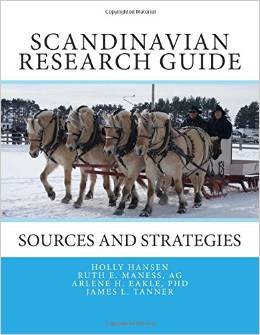
- Scandinavian Research Guide: Sources and Strategies
- The Ins and Outs of Probate for Genealogists: Research Guide
You can find the books on Amazon.com by searching for the book title or by searching for any one of the authors.
These books originate in a continuing series of week-long FamilyHistoryExpos.com Research Retreats held in Salt Lake City, Utah with hands-on instruction at the world famous Family History Library. The next event will be held from August 17, 2015 to August 22, 2015. The event includes both hands-on help from the FamilyHistoryExpos.com staff, but also classroom training. The next Retreat is as follows:
New England Library Learning ExperienceThe book series has been created as the classroom material for the Retreats. If you cannot attend the classes in person, the entire class offerings will be made available in a live broadcast in the form of a webinar. See the New England Virtual Family History Expo, August 17, 2015 to August 21, 2015. The webinar classes are also recorded and a CD containing the entire class presentations will be available for purchase in addition to the books online on Amazon.com. You can keep posted on the upcoming Retreats by going to the Events page on FamilyHistoryExpos.com.
Research at Family History Library / Classroom & Lodging at Crystal Inn Hotel
230 W. 500 S.
Salt Lake City , Utah 84101
801-328-4466
To see all of the books, including those that will be coming soon to Amazon.com, visit the FamilyHistoryExpos.com Store. There you will find the books, the CDs of the recorded webinars and many other helpful genealogically related products.
As I mentioned in a previous post, Holly, Arlene and I plus some others such as Ruth Maness, AG, are the authors of these books. We do get paid for our writing and teaching as we have for many years in our association with FamilyHistoryExpos.com. If you have attended a genealogy conference over the years sponsored by FamilyHistoryExpos.com you have experienced the high level of professionalism of Holly Hansen and her staff. By teaching the classes, helping attendees with their research at the Family History Library, publishing the books and the recordings of the webinars, we hope to reach an even larger audience than we did by holding the conferences.
The Family History Guide added to FamilySearch App Gallery

The FamilySearch.org website is large and fairly complex. Since its introduction, there has been a need for a "front end" or a way to understand and learn about all of the resources. This new "App" in the FamilySearch.org App Gallery clearly addresses that challenge. The Family History Guide is described as follows:
The Family History Guide helps you get started - and get farther - with your family history. There are links to over 1,000 videos and articles, all integrated into a step-by-step learning plan for learners of all levels. Projects include Family Tree, Memories, Descendants or Ordinances, Discover (research for over 35 countries), Indexing, Help, and Technology. Classroom materials are also available for instructors who want to teach using The Family History Guide.This is an organized, structured approach to learning about FamilySearch.org. Quoting from a comment by blogger, Susan Lynne Maxwell:
This is such a great tool for beginners, intermediates and for advanced family historians. It holds your hand while it guide you through a learning process or even refreshes your skills. You have goals that can be tracked using tracker sheets so you know what you have accomplished and what you have left to learn. FamilySearch and others offer such great material and this tool takes you first to some of the most important videos and documents to help you learn. Then as you get more comfortable with the process you can go all the way through the discovery process honing your research skills and and documenting your family memories. This tool is for everyone!OK, so since when do I praise a new program so effusively? The answer is that this program, The Family History Guide, addresses a need that has been floating around for years. In my experience, day after day, answering questions from patrons at the Family History Library and others, I have seen a need for this type of product. The Family History Guide is a structured, very professional and complete introduction to genealogy as well as the specifics of FamilySearch.org.
To get started with The Family History Guide, you should watch the short introductory video.
All you need to do from the startup page is to click on the Get Started link. We have already planned to do a series of classes at the Brigham Young University Family History Library specifically on The Family History Guide.
Monday, July 27, 2015
Is historical research intellectual property?
If you have been involved in genealogical research or other historically related areas of study, you have probably heard many references to "intellectual property." We now even have whole law firms that advertise that they practice intellectual property law and you may hear a reference to "intellectual property rights." From my perspective, this is another one of those situations where a vague and undefinable interest is evolving into a "right."
As set forth on the website for the World Intellectual Property Organization, the definition of "intellectual property" is as follows:
Does historical research fall into any of those categories? No where in the area of copyright (intellectual property) claims does this issue become more tangled and obscure than with the issue of photographs both old and new. One genealogical issue that is commonly discussed with excessive claims of rights is the headstone photo. If I go out and take a photo of my grandfather's headstone, is my photo subject to my claim for copyright? My first question, of course, is why would you want to make a claim for copyright for a headstone photo? Another question, even more obscure, is whether or not the headstone itself is covered by some claim of copyright? The answer can be yes to both questions. Should we then stop making photos of headstones and publishing them online? Strict and legalistic interpretation of the existing copyright law in the U.S. would seem to mandate a yes to that question also. Sometimes, those hosting photos of headstones try to avoid liability for publishing the photos by disclaimers and other legal language. Are these disclaimers effective? Interesting question.
Let me posit a hypothetical situation. Suppose a photographer takes a photo in 1940 of your great-grandfather. You find the photo among the effects of your father when he passes away. You are surprised and happy to have a photo of your great-grandfather who you never met or knew. Can you publish the photo online for the enjoyment of other family members? Some attorneys would counsel you with a long discussion about copyright and its ability to be inherited and then tell you that the copyright to the photo was still owned by the photographer and that even if the photographer were dead, you would have to have permission from his or her heirs to publish the photo. Why not just throw the photo away and avoid the issue?
Let's look at the reality of the situation. Yes, there is a potential claim for copyright. If we go to the copyright law (See the Summary above from Cornell University), we learn that a work published between 1923 through 1977 must have a copyright notice and that the failure to comply with the required formalities render the work in the public domain. Ha, you say. But then the overly zealous attorney responds, but what if the photo was not "published?" Unpublished works are protected for a period of time equal to the life of the author (photographer) plus 70 years.
This situation poses a number of seemingly unsolvable issues. First, who took the photograph? Unless there is some identifying mark on the photo, such as a the name of a studio or address etc., there is likely no way to determine the photographer. Second, how do you know whether or not the photo was ever published? The U.S. Copyright Office describes publication like this:
What about all the photos on Instagram, Flickr and Facebook? Now we are into another huge issue. I cannot give anyone legal advice on this issue. I recommend that if you have a real problem and need an answer that you seek help from a competent attorney who practices in the area of copyright law.
Unfortunately, the status of our copyright law in the U.S. asks more questions than there are answers. If everyone who had a copyright interest exercised their full legal rights, much of what we see today on genealogy websites would disappear and our ability to discover and document our families would be severely curtailed.
The lack of clear and concise guidelines in the U.S. Copyright Law leads some to advise extreme caution. It also encourages genealogical researchers who really have no interest practical or otherwise to a claim for copyright to assert such claims and become irate and abusive when they believe their rights have been violated. In my hypothetical above, personally, I would look at the photo. If there is no copyright mark or claim, I would consider it to be in the public domain. I would suggest that the photo was either taken by your father (in whose possession it was found) or someone else. If someone else, then the fact your father had the photo would indicate to me that it had been published. If your father took the photo, then simply ask any other heirs for their permission to publish the photo.
I cannot council anyone to take such a risk however. What about the copyright claim to a headstone? Yes, headstones can be copyright protected, but the same time limits apply. However, there is also another issue dealing with the ability of a property owner to regulate the activities on their property. Hence, a cemetery owner or operator may restrict photography on the premises.
As set forth on the website for the World Intellectual Property Organization, the definition of "intellectual property" is as follows:
Intellectual property (IP) refers to creations of the mind, such as inventions; literary and artistic works; designs; and symbols, names and images used in commerce.
IP is protected in law by, for example, patents, copyright and trademarks, which enable people to earn recognition or financial benefit from what they invent or create. By striking the right balance between the interests of innovators and the wider public interest, the IP system aims to foster an environment in which creativity and innovation can flourish.From a legal standpoint, there are significant differences between patents, copyrights and trademarks. Those differences are so significant, that it is very unlikely that you will find an "intellectual property" law firm that has anything to do with patents. It is also important to point out that the United States government separates copyright from patent and trademark practice. Copyright law is administered by the United States Copyright Office. Patents and trademarks come under the jurisdiction of the United States Patent and Trademark Office. Any attorney can practice law in the area of copyrights and call themselves an intellectual property attorney. Patent attorneys, on the other hand, must be registered with the Patent and Trademark Office to practice law in this area. In Arizona, for example, there are about 500 registered patent attorneys and well over 16,000 attorneys in all areas of practice. See American Bar Association, National Lawyer Population by State (2013).
Lumping these different areas of law into an artificial umbrella called "intellectual property" obscures the fundamental differences between these distinct areas of the law. But what is more egregious is the fact that references to "intellectual property" contain references to vague "rights" that are clearly not protected by any legal process or statute.
Now, as genealogists, we find ourselves in a quandary. We do historical research. We discover documents, most of which are not covered by copyright or any other "intellectual property" protection and we convert those documents (organize, extract, summarize etc.) into our "own work." Some of the documents we use, such as U.S. Federal Census records, are clearly exempt from any copyright protection as U.S. Government Documents. Most of the other documents we consult are either long out of copyright due to the age of the documents or otherwise not covered by any sort of protection. In some cases and in some other countries, the same types of documents may still be subject to copyright claims by the originator or the government.
The real question, from the standpoint of genealogical research, is not the copyright status of the documents we research, but the extent to which we can claim any rights to the information and to the documents themselves when the source documents are clearly not covered by any claim of copyright? In other words, is historical research per se, intellectual property? My answer is a very definite "it depends." The answer lies in this statement from the United States Copyright Office:
Copyright, a form of intellectual property law, protects original works of authorship including literary, dramatic, musical, and artistic works, such as poetry, novels, movies, songs, computer software, and architecture. Copyright does not protect facts, ideas, systems, or methods of operation, although it may protect the way these things are expressed. See Circular 1, Copyright Basics, section "What Works Are Protected."The best summary of the U.S. copyright law is found on the webpage, "Copyright Term and Public Domain in the United States, 1 January 2015" by Peter B. Hirtle of Cornell University.
Does historical research fall into any of those categories? No where in the area of copyright (intellectual property) claims does this issue become more tangled and obscure than with the issue of photographs both old and new. One genealogical issue that is commonly discussed with excessive claims of rights is the headstone photo. If I go out and take a photo of my grandfather's headstone, is my photo subject to my claim for copyright? My first question, of course, is why would you want to make a claim for copyright for a headstone photo? Another question, even more obscure, is whether or not the headstone itself is covered by some claim of copyright? The answer can be yes to both questions. Should we then stop making photos of headstones and publishing them online? Strict and legalistic interpretation of the existing copyright law in the U.S. would seem to mandate a yes to that question also. Sometimes, those hosting photos of headstones try to avoid liability for publishing the photos by disclaimers and other legal language. Are these disclaimers effective? Interesting question.
Let me posit a hypothetical situation. Suppose a photographer takes a photo in 1940 of your great-grandfather. You find the photo among the effects of your father when he passes away. You are surprised and happy to have a photo of your great-grandfather who you never met or knew. Can you publish the photo online for the enjoyment of other family members? Some attorneys would counsel you with a long discussion about copyright and its ability to be inherited and then tell you that the copyright to the photo was still owned by the photographer and that even if the photographer were dead, you would have to have permission from his or her heirs to publish the photo. Why not just throw the photo away and avoid the issue?
Let's look at the reality of the situation. Yes, there is a potential claim for copyright. If we go to the copyright law (See the Summary above from Cornell University), we learn that a work published between 1923 through 1977 must have a copyright notice and that the failure to comply with the required formalities render the work in the public domain. Ha, you say. But then the overly zealous attorney responds, but what if the photo was not "published?" Unpublished works are protected for a period of time equal to the life of the author (photographer) plus 70 years.
This situation poses a number of seemingly unsolvable issues. First, who took the photograph? Unless there is some identifying mark on the photo, such as a the name of a studio or address etc., there is likely no way to determine the photographer. Second, how do you know whether or not the photo was ever published? The U.S. Copyright Office describes publication like this:
Published or Unpublished? Under copyright law, publication is the distribution of copies of a work—in this case, a photograph—to the public by sale or other transfer of ownership or by rental, lease, or lending. Offering to distribute copies to a group of people for purposes of further distribution or public display also constitutes publication.
However, a public display of a photograph does not in itself constitute publication.You might want to read the Copyright Tutorial from the American Society of Media Photographers.
The definition of publication in U.S. copyright law does not specifically address online transmission. The Copyright Office therefore asks applicants, who know the facts surrounding distribution of their works, to determine whether works are published.
What about all the photos on Instagram, Flickr and Facebook? Now we are into another huge issue. I cannot give anyone legal advice on this issue. I recommend that if you have a real problem and need an answer that you seek help from a competent attorney who practices in the area of copyright law.
Unfortunately, the status of our copyright law in the U.S. asks more questions than there are answers. If everyone who had a copyright interest exercised their full legal rights, much of what we see today on genealogy websites would disappear and our ability to discover and document our families would be severely curtailed.
The lack of clear and concise guidelines in the U.S. Copyright Law leads some to advise extreme caution. It also encourages genealogical researchers who really have no interest practical or otherwise to a claim for copyright to assert such claims and become irate and abusive when they believe their rights have been violated. In my hypothetical above, personally, I would look at the photo. If there is no copyright mark or claim, I would consider it to be in the public domain. I would suggest that the photo was either taken by your father (in whose possession it was found) or someone else. If someone else, then the fact your father had the photo would indicate to me that it had been published. If your father took the photo, then simply ask any other heirs for their permission to publish the photo.
I cannot council anyone to take such a risk however. What about the copyright claim to a headstone? Yes, headstones can be copyright protected, but the same time limits apply. However, there is also another issue dealing with the ability of a property owner to regulate the activities on their property. Hence, a cemetery owner or operator may restrict photography on the premises.
Sunday, July 26, 2015
Is the Microfilm Record Complete?
This past week, I was searching through the microfilm records of the Fourth Presbyterian Church in Philadelphia, Pennsylvania at the Brigham Young University, Harold B. Lee Library, Family History Library. The FamilySearch Catalog listing for these records is as follows;
I have yet to find when William Linton came to the United States. Unfortunately, he died in December of 1851 and was buried in the Fourth Presbyterian Church Burial Ground in Philadelphia. Part of my investigation is an attempt to determine when and where he was born in Northern Ireland. The family has recorded his birthdate only as 1801 in Ardstraw, Tyrone, Ireland but the birth date comes only from his death records. The family records and those on the FamilySearch.org Family Tree, show that William Linton's father was Samuel Linton, b. 1775 in County Down, Ireland. There are seven other Samuel Lintons in the Family Tree without birth or death information. Despite the family traditions, there are no sources supporting a line that somehow moves from Tyrone, Ireland to County Down, Ireland.
Here is the problem with the Fourth Presbyterian Church records in the FamilySearch Catalog.
Baptisms 1800-1819, 1834-1835 -- Communicants (members) -- Marriages 1800-1835, 1824-1838
Family History Library
United States & Canada Film
912992 Items 3 - 4
Baptisms 1800-1819, 1834 -- Communicants -- Marriages 1800-1835 (another filming)
Family History Library
United States & Canada Film
558299 Item 1
Communicants (members) -- Baptisms 1863-1880 -- Marriages 1863-1874, 1877-1880 -- Deaths 1880
Family History Library
United States & Canada Film
912992 Items 5 - 6
Communicants -- Baptisms 1863-1878 -- Marriages 1863-1874 (another filming, 1972)
Family History Library
United States & Canada Film
558476 Item 14
Communicants -- Baptisms 1878-1880 -- Marriages 1877-1880 -- Deaths 1880 (another filming)
Family History Library
United States & Canada Film
558477 Item 1
Communicants -- Baptisms 1880-1882, 1886-1887 -- Marriages 1881-1888
Family History Library
United States & Canada Film
912993 Item 1
Pastors -- Communicants -- Baptisms 1880-1887 -- Marriages 1881-1888 (another filming, 1972)
Family History Library
United States & Canada Film
558476 Item 13
Communicants -- Baptisms 1886-1900
Family History Library
United States & Canada Film
558477 Items 2 - 3
Communicants -- Baptisms 1886-1900 (another filming)
Family History Library
United States & Canada Film
912993 Items 2 - 3
Trustee minutes 1803-1817
Family History Library
United States & Canada Film
558292 Item 1
Trustee minutes 1803-1817 (another filming, 1972)
Family History Library
United States & Canada Film
912993 Item 7
Session minutes 1802-1834, 1841-1892
Family History Library
United States & Canada Film
558473 Items 1-3
Session minutes 1802-1834, 1841-1892 (another filming, 1972)
Family History Library
United States & Canada Film
912993 Items 4 - 6
Church records, 1800-1900 [Fourth Presbyterian]None of these records have been digitized, so it is back to the microfilm viewers. In this case, I am fortunate. The BYU Family History Library has ScanPro 2000s for viewing and copying the microfilms. The challenge is that I am looking for a specific range of dates. My Great-great-grandfather, William Linton, immigrated from Canada (originally from Northern Ireland) in about 1850. His wife and family came separately from New Brunswick to Philadelphia in 1851. The exact date is not recorded but the record shows that it was from the 2nd Quarter beginning in April.
Authors:
Fourth Presbyterian Church (Philadelphia, Pennsylvania) (Main Author)
Format:
Manuscript/Manuscript on Film
Language:
English
Publication:
Salt Lake City, Utah : Filmed by the Genealogical Society of Utah, 1968, 1972
Physical:
on 8 microfilm reels ; 35 mm.
I have yet to find when William Linton came to the United States. Unfortunately, he died in December of 1851 and was buried in the Fourth Presbyterian Church Burial Ground in Philadelphia. Part of my investigation is an attempt to determine when and where he was born in Northern Ireland. The family has recorded his birthdate only as 1801 in Ardstraw, Tyrone, Ireland but the birth date comes only from his death records. The family records and those on the FamilySearch.org Family Tree, show that William Linton's father was Samuel Linton, b. 1775 in County Down, Ireland. There are seven other Samuel Lintons in the Family Tree without birth or death information. Despite the family traditions, there are no sources supporting a line that somehow moves from Tyrone, Ireland to County Down, Ireland.
Here is the problem with the Fourth Presbyterian Church records in the FamilySearch Catalog.
Baptisms 1800-1819, 1834-1835 -- Communicants (members) -- Marriages 1800-1835, 1824-1838
Family History Library
United States & Canada Film
912992 Items 3 - 4
Baptisms 1800-1819, 1834 -- Communicants -- Marriages 1800-1835 (another filming)
Family History Library
United States & Canada Film
558299 Item 1
Communicants (members) -- Baptisms 1863-1880 -- Marriages 1863-1874, 1877-1880 -- Deaths 1880
Family History Library
United States & Canada Film
912992 Items 5 - 6
Communicants -- Baptisms 1863-1878 -- Marriages 1863-1874 (another filming, 1972)
Family History Library
United States & Canada Film
558476 Item 14
Communicants -- Baptisms 1878-1880 -- Marriages 1877-1880 -- Deaths 1880 (another filming)
Family History Library
United States & Canada Film
558477 Item 1
Communicants -- Baptisms 1880-1882, 1886-1887 -- Marriages 1881-1888
Family History Library
United States & Canada Film
912993 Item 1
Pastors -- Communicants -- Baptisms 1880-1887 -- Marriages 1881-1888 (another filming, 1972)
Family History Library
United States & Canada Film
558476 Item 13
Communicants -- Baptisms 1886-1900
Family History Library
United States & Canada Film
558477 Items 2 - 3
Communicants -- Baptisms 1886-1900 (another filming)
Family History Library
United States & Canada Film
912993 Items 2 - 3
Trustee minutes 1803-1817
Family History Library
United States & Canada Film
558292 Item 1
Trustee minutes 1803-1817 (another filming, 1972)
Family History Library
United States & Canada Film
912993 Item 7
Session minutes 1802-1834, 1841-1892
Family History Library
United States & Canada Film
558473 Items 1-3
Session minutes 1802-1834, 1841-1892 (another filming, 1972)
Family History Library
United States & Canada Film
912993 Items 4 - 6
If you look carefully at the dates covered by the records and focus on those records that might help find a person in 1851 or before, you will see that there are several gaps in the records. When did William Linton leave Canada for the United States? One limiting factor is the fact that his last child, John Selfridge Linton, was supposedly born in 1842 in New Brunswick, Canada. So the most reasonable time period was likely from 1842 to 1851.
There are only two sets of these microfilmed records that cover that time period. Even though the titles to the records only mention certain time periods, if you were being careful about your research, you would pull all of these microfilms and check to make sure the cataloging data was correct and that there were not some later or earlier records stuck in that got missed in the cataloging process. So, I am going to have to look at every one of these records.
But the more important issue is whether or not the records are complete. Can I assume that I have made an adequate (reasonably exhaustive) search if I conclude that the information is not there? Well, I am just starting to gather records on this particular point and I will probably move to Canadian records as soon as I finish with the Church records.
The point is important. You need to be carefully aware of the time periods involved in your research. Obviously, you also need to be liberal and check many years before and after the dates traditionally recorded for an individual, especially if the individual has no listed sources.
Saturday, July 25, 2015
New Books on Amazon.com and FamilyHistoryExpos.com
During the past seven or eight months or so, Holly Hansen of FamilyHistoryExpos.com, Arlene H. Eakle, Ph.D and I (with other contributors in the individual books such as Ruth Maness) have been writing a series of research guides for genealogists. There are now eight of those guides in print. Two of them have been put online on Amazon.com and all of them are available on the FamilyHistoryExpos.com website store. Here are the two Amazon.com offerings with the link to the books:
The second book is:
The other books are being prepared and will also eventually be available on Amazon.com, however, they are presently available directly from the FamilyHistoryExpos.com Book Store.
I must observe that writing and editing seven or eight books at the rate of one a month is a serious undertaking. We intend to have one a month for the foreseeable future also. Stay tuned. I might also mention that the latest book on Probate is 172 pages long.
![]() |
| http://www.amazon.com/Ins-Outs-Probate-Genealogists-Research/dp/1515034097/ref=sr_1_1?ie=UTF8&tag=libraryextension-20&camp=211189&creative=9325&linkCode=as2&creativeASIN=1515034097 |
![]() |
| http://www.amazon.com/Scandinavian-Research-Guide-Sources-Strategies/dp/1512015466/ref=sr_1_fkmr2_1?s=books&ie=UTF8&qid=1437869745&sr=1-1-fkmr2&keywords=scandinavian+research+guide+genealogy |
![]() |
| Add caption |
I must observe that writing and editing seven or eight books at the rate of one a month is a serious undertaking. We intend to have one a month for the foreseeable future also. Stay tuned. I might also mention that the latest book on Probate is 172 pages long.
Subscribe to:
Posts (Atom)